relationships
June 23, 2026
As Somali Independence Day approaches on July 1st, Somali communities across the UK will come together to celebrate a shared history, culture and identity. For some, the day will be marked with family gatherings and community events. For others, it will be a moment to reflect on what it means to belong to one of Britain’s largest and most vibrant African Muslim diaspora communities. Across cities such as London, Birmingham, Sheffield, and Manchester, the occasion serves as both a celebration of heritage and a reminder of the connections that continue to bind communities together.
Beyond the flags and festivities, Somali Independence Day raises a wider question: what keeps culture alive when communities are living hundreds of miles from their homeland? The answer is that t lives in the places where people gather, stories are shared, friendships are formed and traditions are passed down. For the Somali community in Britain, these spaces have played a crucial role, and the reason culture continues to feel alive, relevant and connected to people’s daily lives rather than something that exists only in memory.
You won’t find your soulmate on this blog post but you might find them on Muzz - the world’s biggest Muslim dating and marriage app.
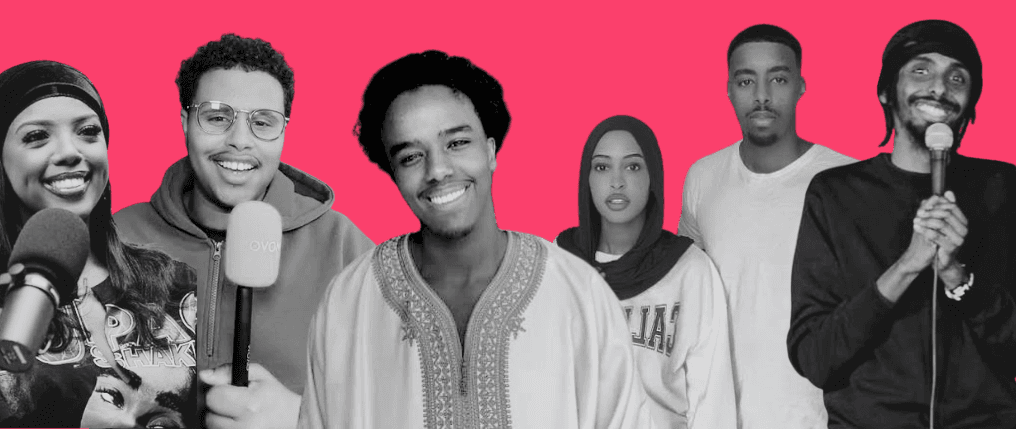
The story of Somalis in Britain is often told through migration, demographics or headlines about integration. Yet those narratives rarely capture the richness of the community itself. Today, the UK is home to one of the largest Somali populations outside the Horn of Africa. Over several decades, Somali communities have established deep roots across the country, building businesses, raising families, creating charities and community organisations, and contributing to British society in countless ways. Entire neighbourhoods have been shaped by Somali entrepreneurship, creativity and resilience. A new generation of British Somalis is now emerging in every field, from politics and healthcare to sport, media and the creative arts. Renowned content creators and public figures such as Chunkz, AJ and Sharky from Beta Squad, and Muna and Duaa from Diary Room, are prime examples of what it means to be a Somali in Britain’s new media landscape.
For many British Somalis, identity is not something fixed. There is the culture inherited from parents and grandparents, shaped by language, faith, history and tradition, but there is also the experience of growing up in Britain, navigating school, workplaces and social environments that often encourage people to simplify who they are. Most British Somalis know that reality doesn’t fit neatly into a single category; they understand that it is possible to be deeply connected to Somali culture while also being British. The challenge is not choosing one identity over another, but rather creating spaces where both can comfortably coexist.
When people talk about preserving culture, they often focus on the most visible aspects of identity. Language, food, traditional dress, celebrations; these are all important, and provide a tangible connection to heritage and help communities maintain a sense of continuity across generations. But culture is sustained through something even more powerful: shared experience. Culture survives when people spend time together, children hear about stories from their elders, communities gather to celebrate achievements and support one another, and most importantly through everyday interaction.
This is why community third spaces matter so much. A third place is a familiar public spot where you regularly connect with others known and unknown, over a shared interest or activity. Whether it’s a mosque, a community centre like Culture House, local Somali-owned restaurants such as Sabiib and SYA Brunchhouse, or meet-up hotspots like Atom Coffee and Coffee House Acton, or a networking spaces like The Somali Circle, these spaces create opportunities for connection that cannot be replicated elsewhere. They provide a setting where people can relax into their identity rather than constantly having to explain it. There is a comfort that comes from being surrounded by people who understand your references, your humour and your experiences without requiring context. For diaspora communities in particular, these spaces become places where culture is not only remembered, but integrated into everyday life.
While Somali Independence Day commemorates a pivotal moment in Somalia’s history, its significance within the diaspora extends far beyond national politics or history. For many British Somalis, it has become one of the most visible celebrations of collective identity throughout the year. It is a moment when people come together to celebrate not only where they come from, but also the community they have built in Britain.
Events like independence days bring together people from different generations, backgrounds and life experiences around something shared. A university student, a business owner, a recent arrival and a grandparent may all experience Somali identity differently, but independence day creates a space where those differences become secondary to a broader sense of belonging.
The work of building community does not happen on a single day each year, it happens through consistent effort and intentional gathering, especially when people create opportunities for others to come together around shared experiences and values.
That spirit is at the heart of the Somali community event Muzz is hosting on Friday 3rd July. Taking place shortly after Somali Independence Day, the event is designed as a celebration of Somali culture, identity and community, featuring a comedy set and quiz night. Importantly, it is not a singles event. It is not centred around matchmaking or networking. Instead, it is an opportunity for Somalis from across the UK to come together, connect with one another and celebrate a culture that continues to thrive across Britain.