Muzz logo

Where Muslims meet

App Store iconGoogle Play icon
Continue to main content arrow

500,000 Successes

15 million Muslims

The app connecting Muslims worldwide

Where Muslims meet

We are the leading Muslim dating and marriage app with over 15 million single Muslims looking for love.

We’re not like the other dating apps. We made Muzz to help single Muslims find their perfect partner while respecting their religious beliefs. Say goodbye to boring biodata CV’s and pushy aunties! We bring together more than 500 happy Muslim couples every day and celebrate over 600,000 Muslim success stories worldwide.

Could you be next? Download the app and start meeting single Muslims today!

Muzz mockup image chat

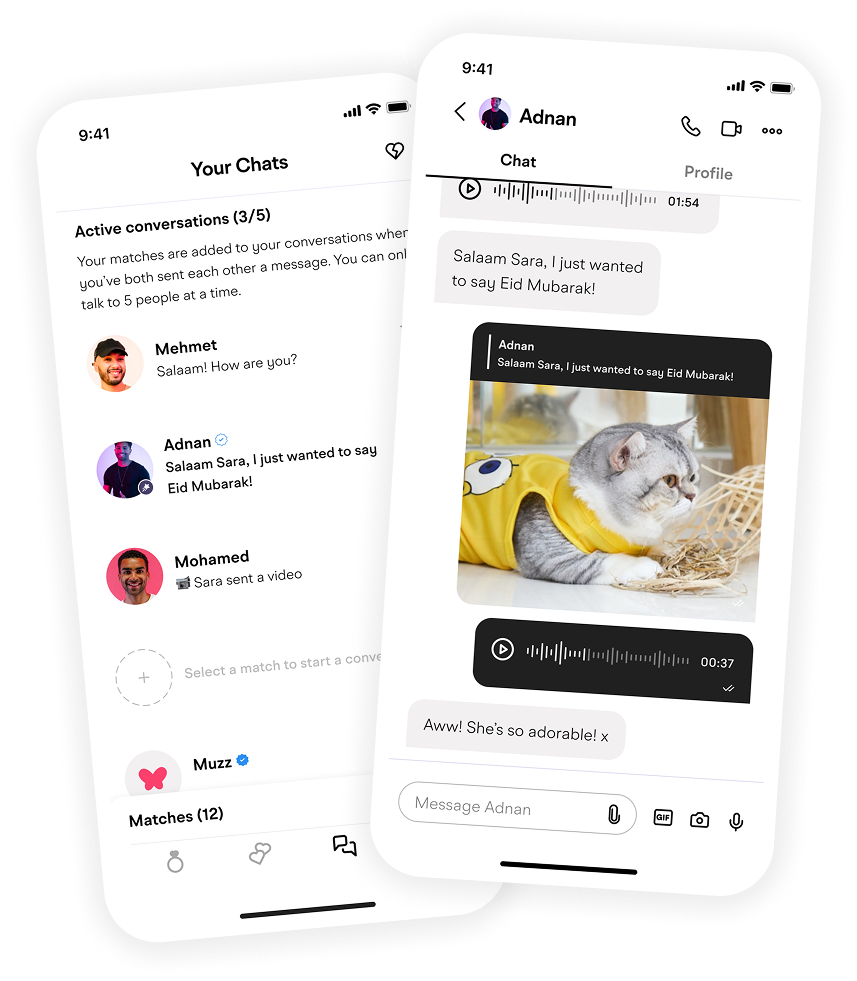
Chat for Free

It’s always FREE to see profiles, match, chat & marry on Muzz.

Muzz mockup image video_calling

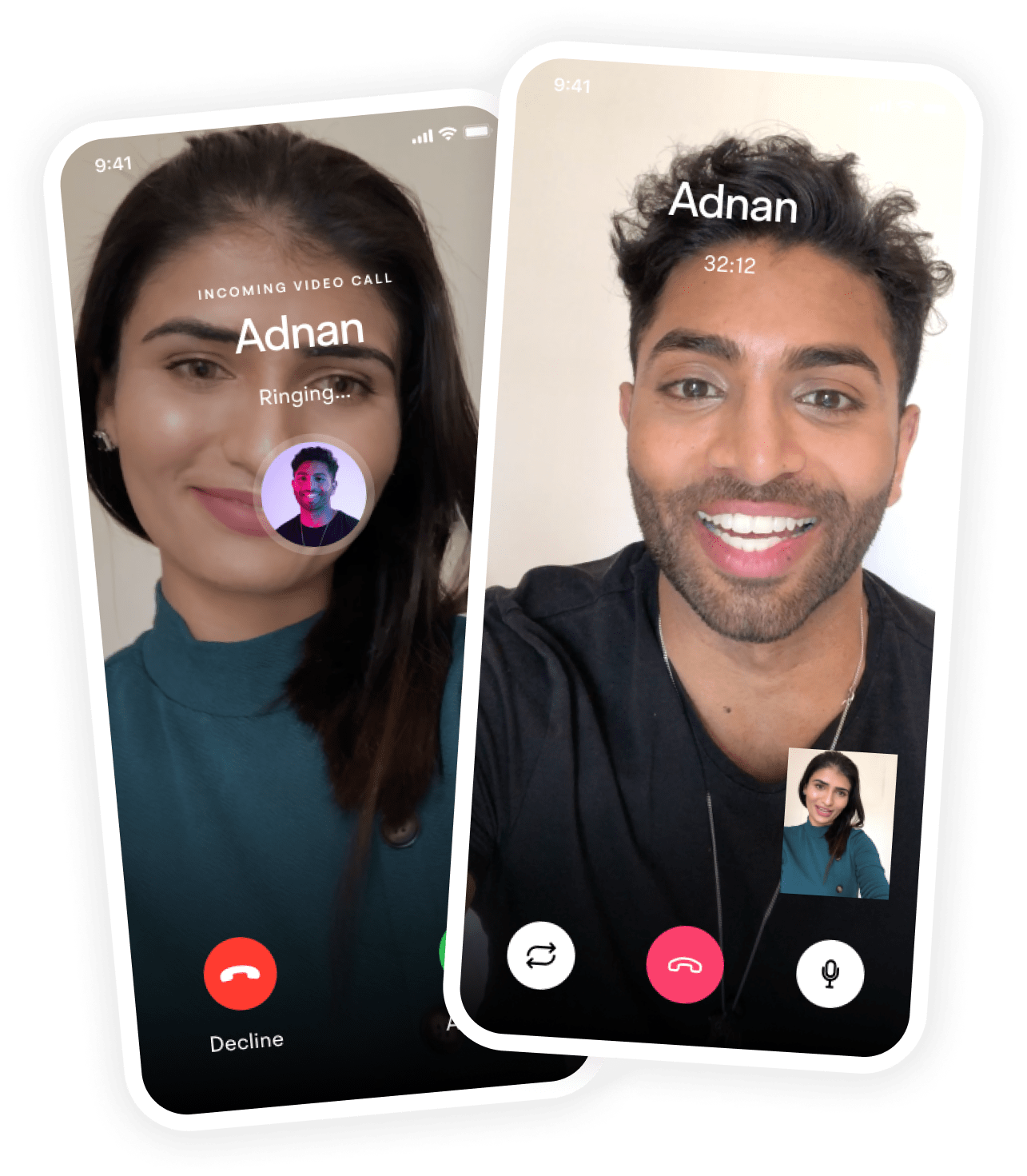
Free Video Calling

You decide who you can call and you never have to share your phone number.

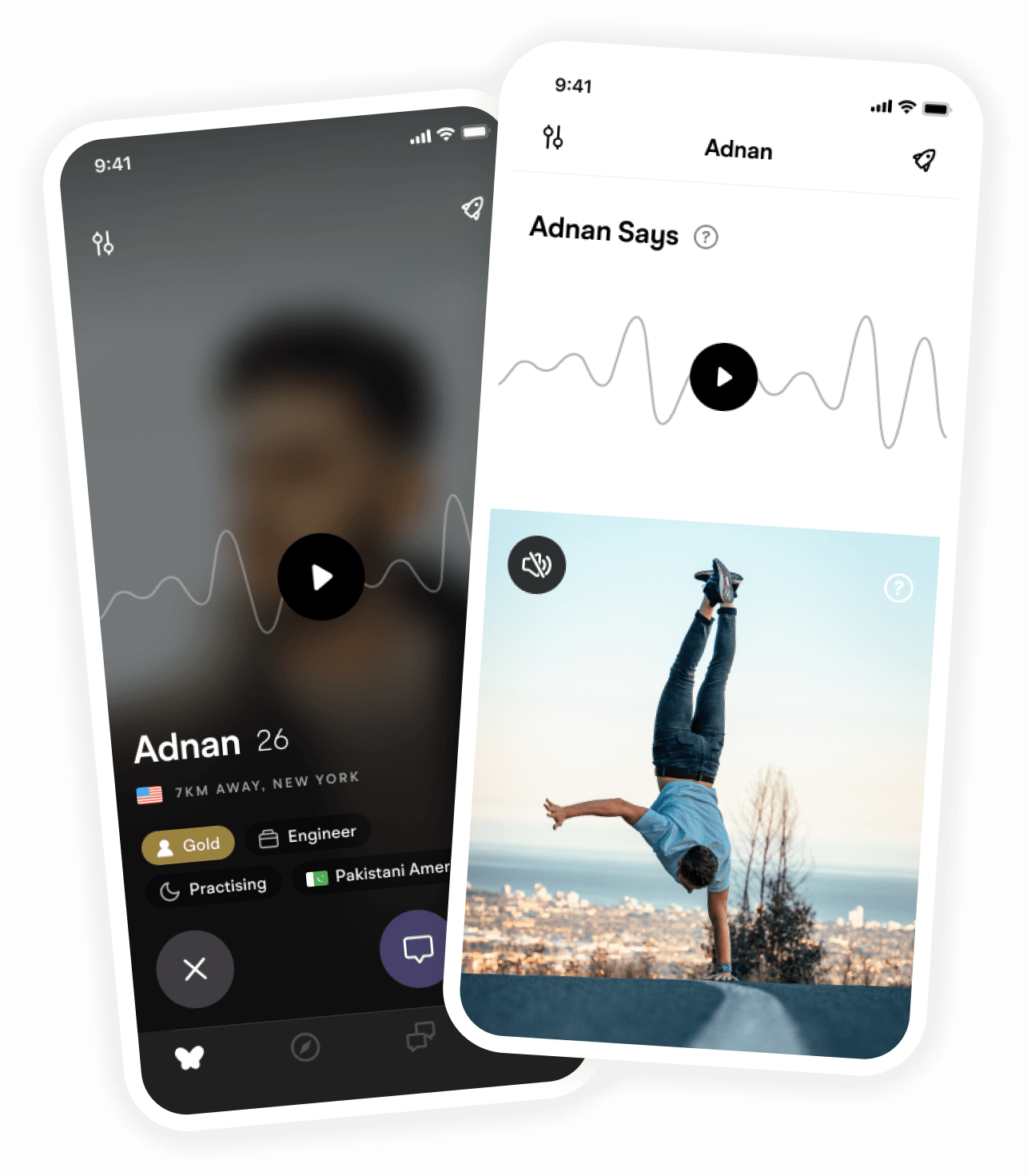
Muzz mockup image voice_intros

Voice and Video Profiles

Show off your personality and stand out from the crowd by adding Voice & Video intros to your profile.

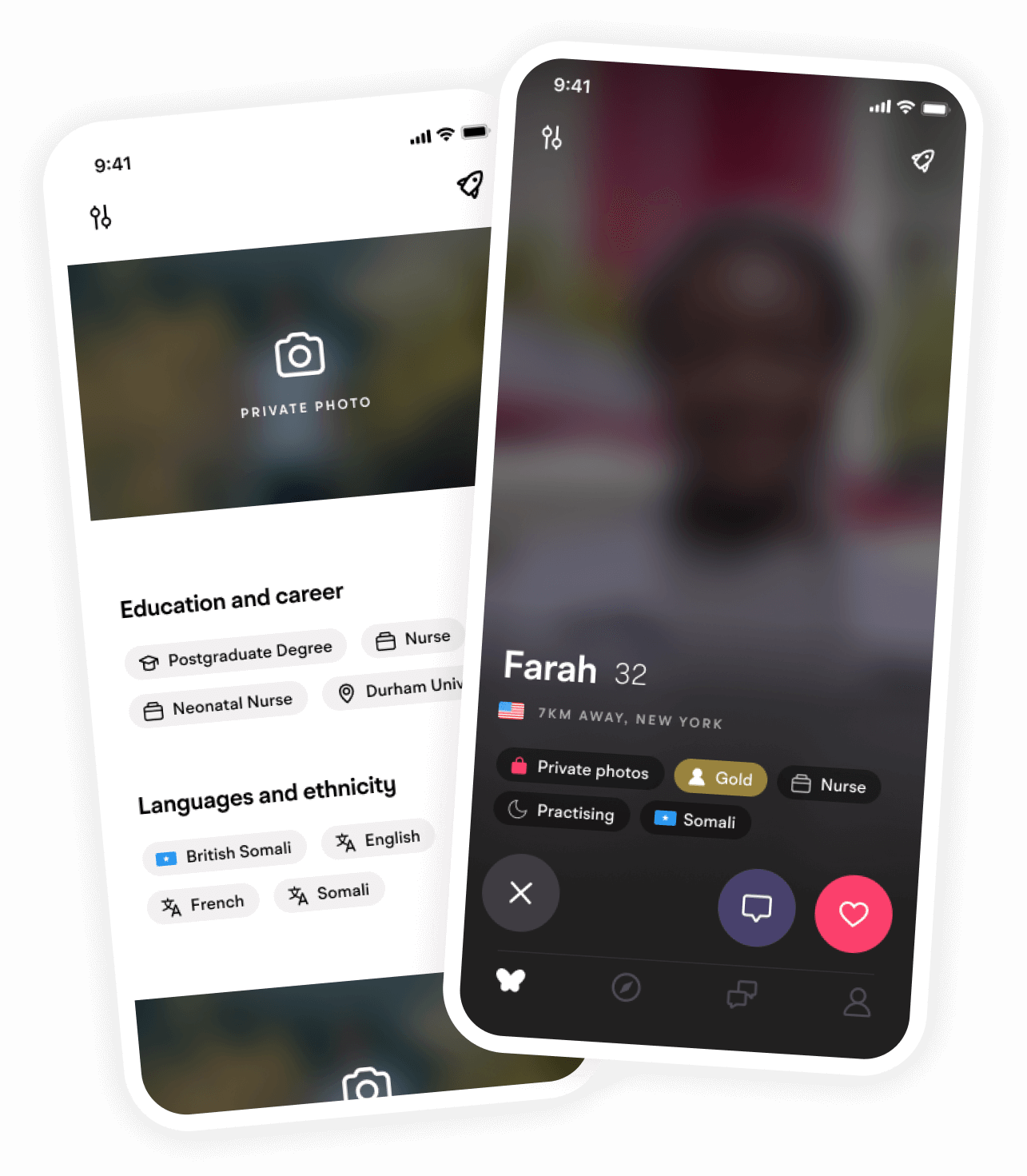
Muzz mockup image complete_privacy

Complete Privacy

Keep your photos hidden and use a nickname to remain anonymous to friends and family.

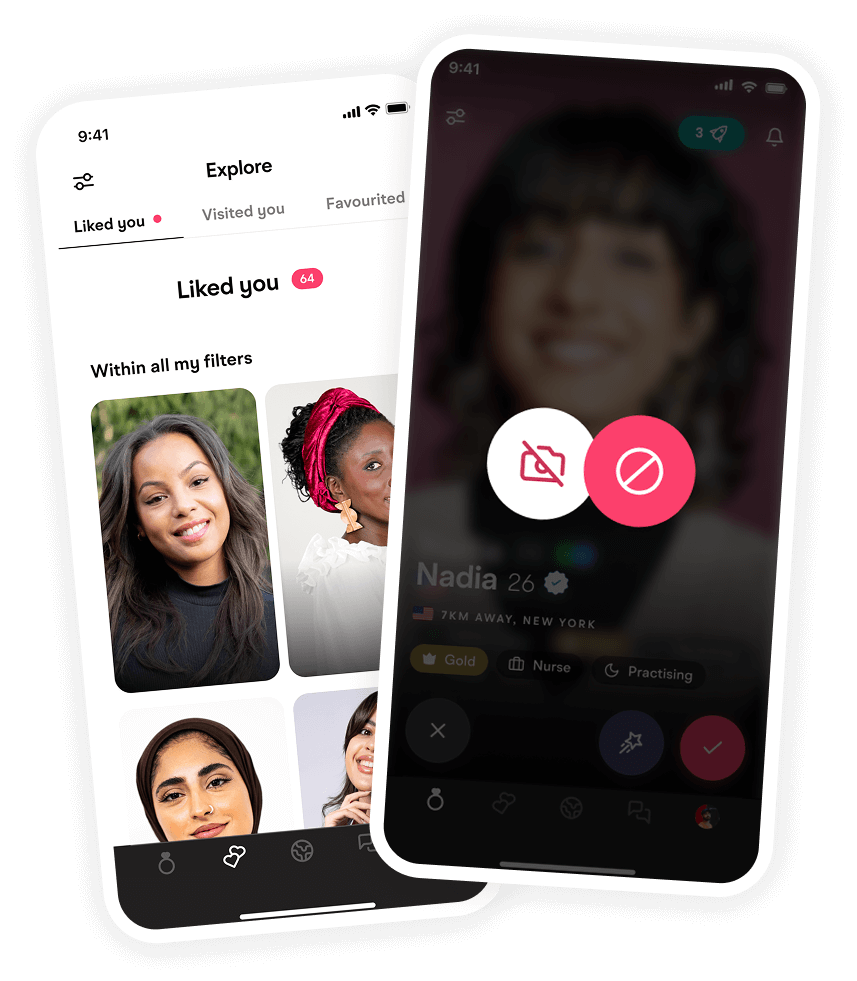
Muzz mockup image screenshot

We block screenshotting!

We now stop people from taking screenshots of your photos. We want you to feel safe in Muzz and not worry about your photos getting into the wrong hands. This includes screen recording as well!

What our members say

Review Stars

Ideal and halal way to meet a potential spouse

Lulud Oktaviani

Lulud Oktaviani

Review Stars

It's a beautiful place to meet women in a halal manner

Bassy Bruno

Bassy Bruno

Review Stars

I'm falling in love with this app

Rabia Shahab

Rabia Shahab

App Store iconGoogle Play icon
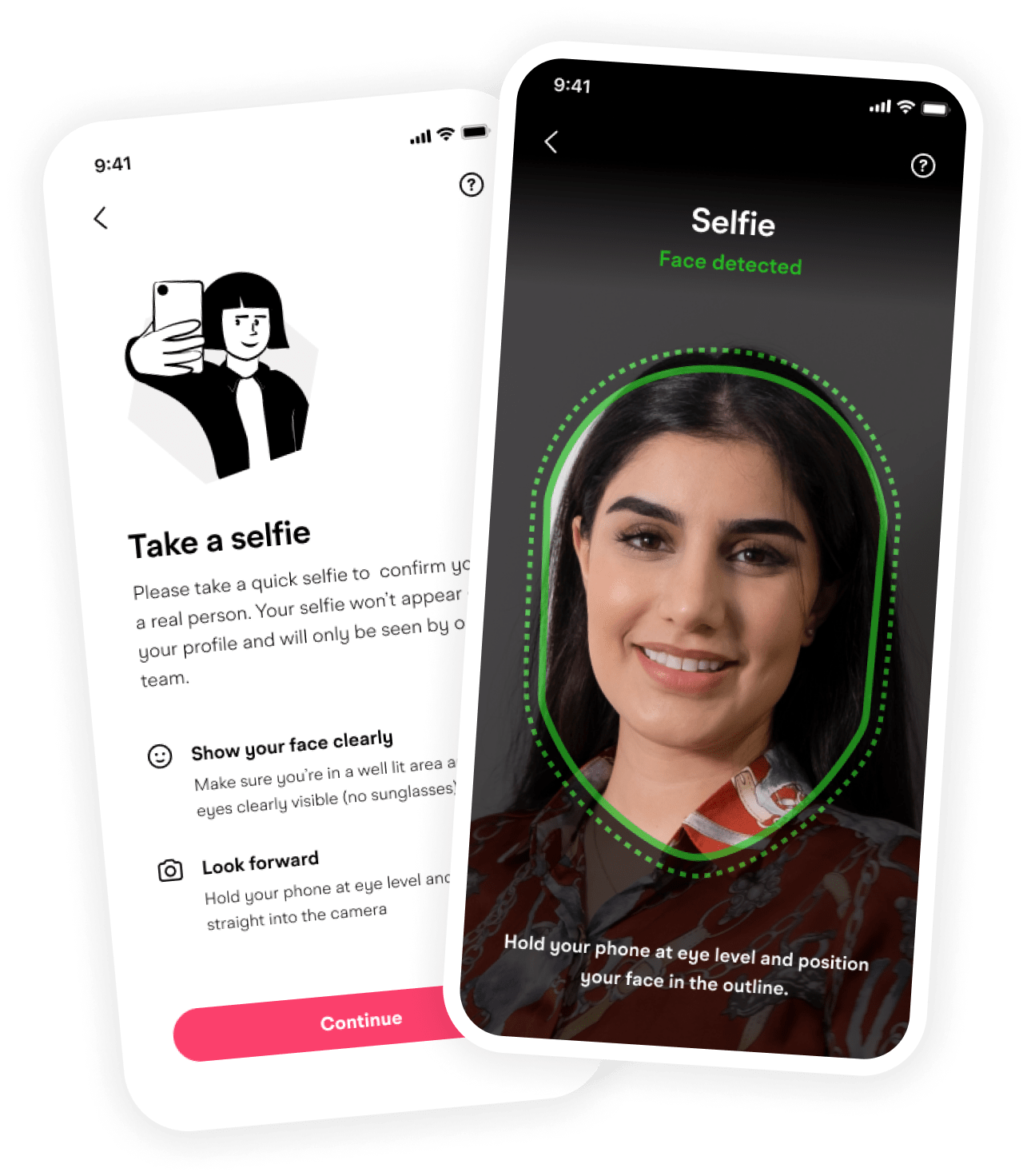
Muzz mockup image selfie_verification

Selfie Verification

With all profiles being verified using Selfie Verification, SMS confirmation, and location checks, you’re safe.

Muzz mockup image filters

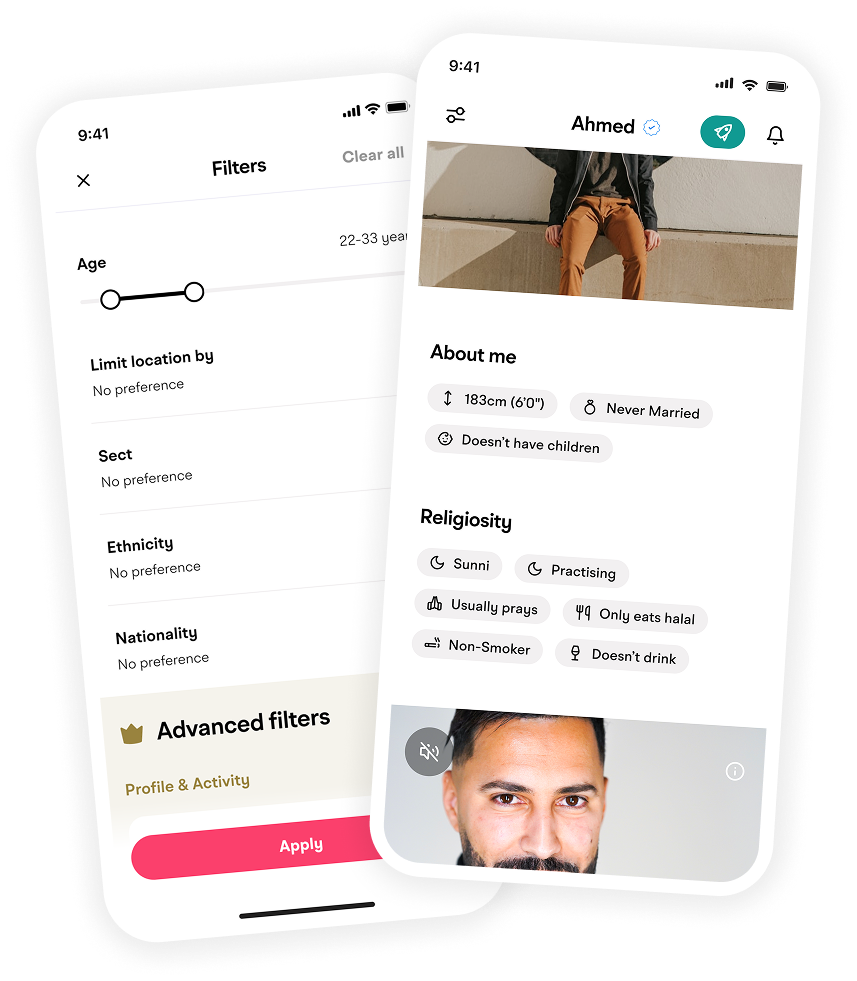
Set your Search filters

With our powerful filters tool, you can tell us exactly the kind of person you're looking for. Set your preferences to get more quality matches and streamline your search for ‘the one’ - all for free!

Muzz mockup image chaperones

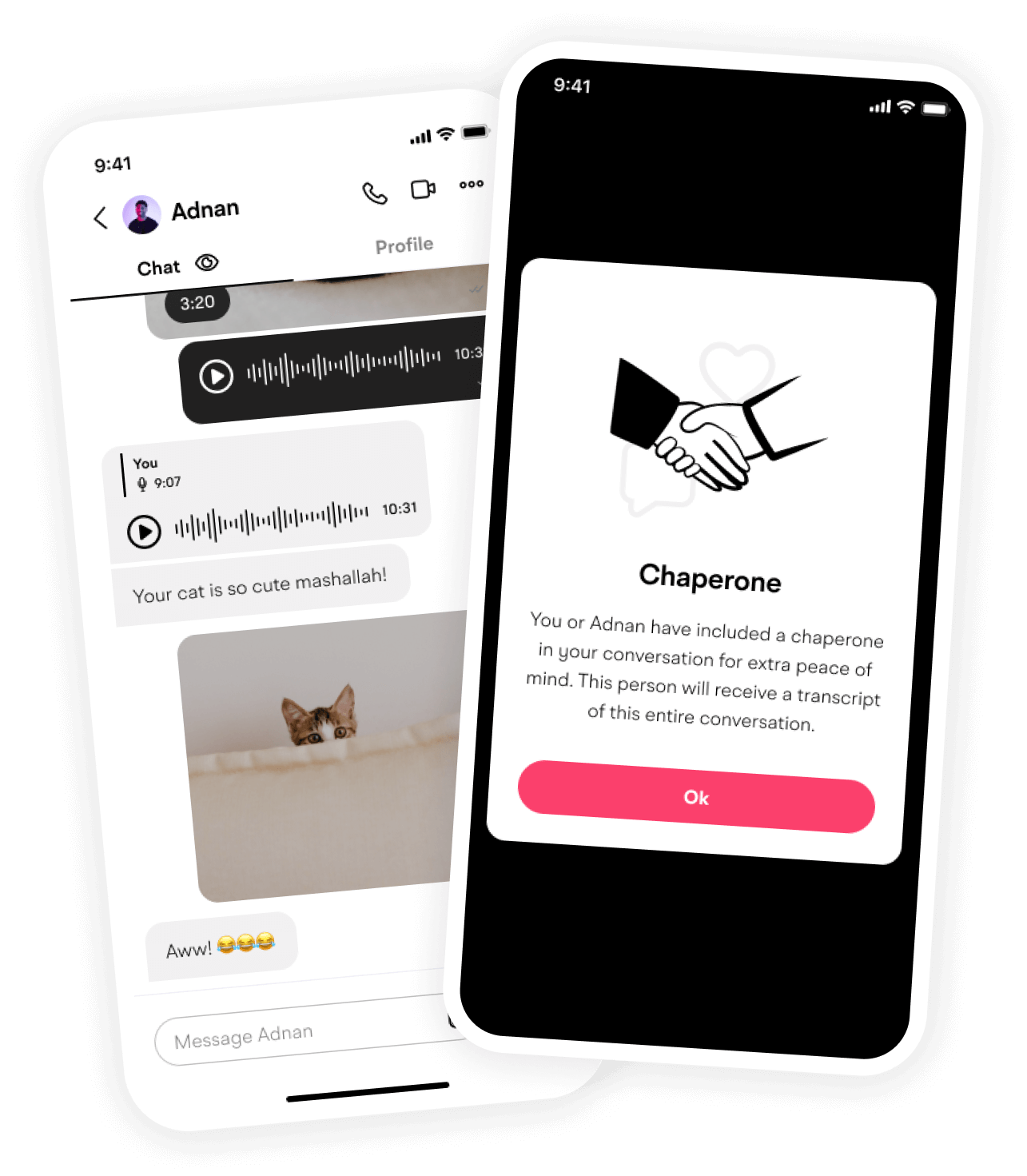
Chaperones

You can even include a chaperone (known as a Wali) in your conversations for extra peace of mind.

Muzz mockup image gold

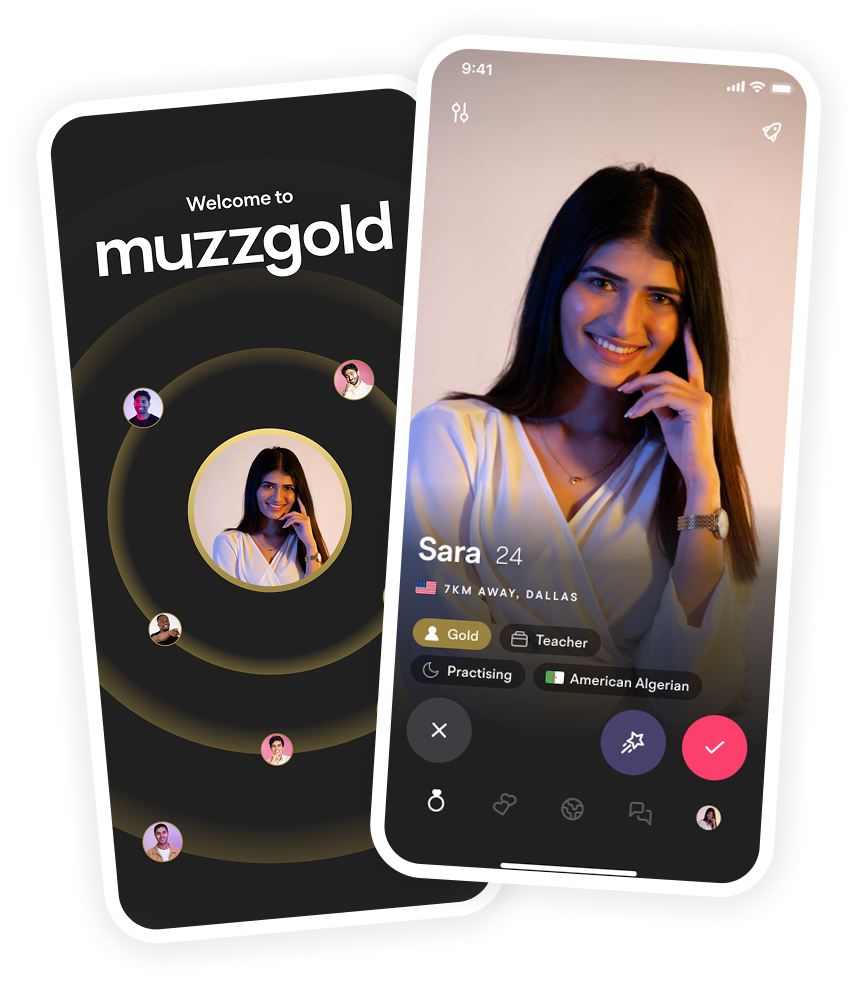
Muzz Gold

Get married faster with Muzz Gold - allowing you to more precisely tailor your search and browse without limits

Find Out More

We’ve been featured in

The Financial TimesGQThe BBCTechCrunchMensHealthThe New York TimesThe TimesTheThe Evening StandardCosmopolitanKonbiniLe Figaro

For press enquiries, email [email protected]

Latest Stories

Article thumbnail

How Community Spaces Are Keeping Somali Culture Alive in Britain

As Somali Independence Day approaches on July 1st, Somali communities across the UK will come together to celebrate a shared history, culture and identity. For some, the day will be marked with family gatherings and community events. For others, it will be a moment to reflect on what it means to belong to one of Britain’s largest and most vibrant African Muslim diaspora communities. Across cities like London, Birmingham, Sheffield, Bristol, and Manchester, the occasion serves as both a celebration of heritage and a reminder of the connections that continue to bind people together across generations.

Beyond the flags, festivities and commemorations, Somali Independence Day raises a wider question: what keeps culture alive when communities are living hundreds of miles from their homeland? The answer is often found not in institutions or official initiatives, but in something much more everyday. It lives in the places where people gather. The places where stories are shared, friendships are formed, traditions are passed down and identity is reinforced without anyone consciously trying to preserve it. For the Somali community in Britain, these spaces have played a crucial role for decades. They are the reason culture continues to feel alive, relevant and connected to people’s daily lives rather than something that exists only in memory.

More Than Just a Diaspora

The story of Somalis in Britain is often told through migration, demographics or headlines about integration. Yet those narratives rarely capture the richness of the community itself. Today, the UK is home to one of the largest Somali populations outside the Horn of Africa. Over several decades, Somali communities have established deep roots across the country, building businesses, raising families, creating charities and community organisations, and contributing to British society in countless ways. Entire neighbourhoods have been shaped by Somali entrepreneurship, creativity and resilience. A new generation of British Somalis is now emerging in every field imaginable, from politics and healthcare to sport, media and the creative arts. Renowned content creators and public figures such as Chunkz, AJ and Sharky from Beta Squad, and Muna and Duaa from Diary Room, are prime examples of what it means to be a Somali in Britain’s new media landscape.

Yet despite these achievements, much of what makes the community strong exists away from public view. It exists in the relationships that people build with one another and the networks that support families through every stage of life. It exists in the aunties who somehow know everyone, the community leaders who dedicate years to organising events, the elders who pass on stories and advice, and the young people creating new spaces for their generation while remaining connected to their roots.

For many British Somalis, identity is not something fixed. There is the culture inherited from parents and grandparents, shaped by language, faith, history and tradition, but there is also he experience of growing up in Britain, navigating school, workplaces and social environments that often encourage people to simplify who they are. Most British Somalis know that reality doesn’t fit neatly into a single category. They understand that it is possible to be deeply connected to Somali culture while also being undeniably British. The challenge is not choosing one identity over another, but rather creating spaces where both can comfortably coexist.

The Spaces That Hold Communities Together

When people talk about preserving culture, they often focus on the most visible aspects of identity. Language, food, traditional dress, celebrations; these are all important, and provide a tangible connection to heritage and help communities maintain a sense of continuity across generations. But culture is sustained through something even more powerful: shared experience.

Culture survives when people spend time together, children hear about stories from their elders, communities gather to celebrate achievements and support one another, and most importantly through everyday interaction. For younger generations, this presents both opportunities and challenges. Never before has it been easier to access information about Somali culture, history and current affairs. A young person can learn about their heritage through podcasts, social media, online communities and social events. Yet information alone cannot replace community. Knowing about a culture is not the same as experiencing it.

This is why community spaces matter so much. Whether it’s a mosque, a community centre like Culture House, local Somali-owned restaurants such as Sabiib and SYA Brunchhouse, or meet-up hotspots like Atom Coffee and Coffee House Acton, or a networking spaces like The Somali Circle, these spaces create opportunities for connection that cannot be replicated elsewhere. They provide a setting where people can relax into their identity rather than constantly having to explain it. There is a comfort that comes from being surrounded by people who understand your references, your humour and your experiences without requiring context.

For diaspora communities in particular, these spaces perform a role that is difficult to quantify but impossible to replace. They become places where culture is not only remembered but actively practised. A language stays alive because people continue speaking it. Traditions endure because people continue participating in them. A sense of belonging develops because people continue showing up for one another. Without spaces that encourage those interactions, even the strongest cultural traditions can begin to feel distant.

How Somali Independence Day Resonates

While Somali Independence Day commemorates a pivotal moment in Somalia’s history, its significance within the diaspora extends far beyond politics or national history. For many British Somalis, it has become one of the most visible celebrations of collective identity throughout the year. It is a moment when people come together to celebrate not only where they come from, but also the community they have built in Britain.

The power of the day lies in its ability to bring together people from different generations, backgrounds and life experiences around something shared. A university student, a business owner, a recent arrival and a grandparent may all experience Somali identity differently, but Independence Day creates a space where those differences become secondary to a broader sense of belonging.

Events like these serve as a reminder that community is not static. For younger generations especially, these moments can be incredibly important. They offer a chance to see the scale and diversity of the wider Somali community, create opportunities to meet people with similar experiences and backgrounds, and help transform culture from something inherited into something personally meaningful.

Celebrating Community Beyond Independence Day

The work of building community does not happen on a single day each year, it happens through consistent effort and intentional gathering, especially when people create opportunities for others to come together around shared experiences and common values.

That spirit is at the heart of the Somali community event Muzz is hosting on Friday 3rd July. Taking place shortly after Somali Independence Day, the event is designed as a celebration of Somali culture, identity and community, featuring a comedy set and quiz night. Importantly, it is not a singles event. It is not centred around matchmaking or networking. Instead, it is an opportunity for Somalis from across the UK to come together, connect with one another and celebrate a culture that continues to thrive across Britain.

At a time when many people feel increasingly disconnected from community life, creating spaces like these feels more important than ever. They provide opportunities for friendships to form, conversations to happen, connections to grow, and remind people that community is not simply something we inherit, but what we can create together.

TICKETS TO THE SOMALI GALA ARE LIVE ON THE APP 🎟️

Article thumbnail

What Djed Spence’s Debut in the World Cup Represents for British Muslims

When Djed Spence was named to represent England in FIFA World Cup 2026, it was more than just another international debut. For many fans, it was a football story: a talented player earning his place on one of the biggest stages in the game after years of hard work. But for many Muslims across Britain, it can feel like something more meaningful.

But football didn’t suddenly became diverse overnight. Muslim communities have been part of British football culture for generations, filling stadiums, debating line-ups, playing Sunday league football in the rain, and spending countless hours arguing over goals. Football has long been woven into the fabric of Muslim life in Britain. Yet seeing someone who shares your faith take the field for your country carries a different kind of significance. It serves as a reminder that Muslims belong, and belonging is a powerful thing.

The Future of Muslims in Football

Djed Spence has become the first openly Muslim player to feature for England’s senior men’s team, marking a significant moment for representation in English football. Tonight, England will play against Croatia in their first Group Stage match at Dallas Stadium in Texas, with the highly anticipated match kicking off at 9:00pm GMT (3:00pm CT).

The Tottenham Hotspur defender earned his first England cap after coming off the bench in the Three Lions’ 5-0 World Cup qualifying win over Serbia. Reflecting on the achievement, Spence described the opportunity as a blessing and said he hopes his journey can inspire the next generation of young Muslims pursuing their dreams in sport.

Spence has spoken openly about the importance of Islam in his life, regularly sharing messages of gratitude and faith with his followers. His England debut was widely celebrated across the football community, with many highlighting the impact his visibility could have for young Muslim athletes who rarely see themselves represented on the international stage.

More Than a Footballer

The conversation around representation often focuses on visibility. The phrase “you can’t be what you can’t see” has become a familiar one, and for good reason. When young people see someone who shares aspects of their background succeed, it expands their sense of possibility. But representation is about more than aspiration – it’s about familiarity and feeling at home.

For years, many British Muslims have supported England while simultaneously navigating questions around identity, culture, and belonging. They have celebrated England victories, suffered through England heartbreak, and grown up immersed in football culture just like everyone else. Yet there are moments when seeing yourself reflected back in a national story can make all the difference.

Djed Spence’s England debut is one of those moments. Not because he represents every Muslim experience, or that his journey mirrors anyone else’s exactly, but because his presence reflects a reality that has long existed across Britain. Muslims are not just watching from the sidelines anymore, they are part of the story.

Why Belonging Matters

Belonging is one of those things we rarely think about until we don’t feel it. It shapes confidence, identity, and the way people move through the world. When people feel accepted within a community, they are more likely to participate, contribute, and thrive. When they feel seen, they feel more comfortable showing up as themselves.

Football offers one of the clearest examples of this. The sport has an extraordinary ability to bring together people from different cultures, backgrounds, and experiences. For ninety minutes, strangers become teammates and entire countries move in sync. A shared passion creates a common language that transcends differences. That sense of connection is one of the reasons football remains so beloved within Muslim communities around the world.

Football as a Community Builder

Long before football became a global business, it was a community activity. It was a reason for people to gather, socialise, and connect. In many ways, that remains true today. Ask someone about their favourite football team and chances are they won’t simply tell you about the club. They’ll tell you about the parent who introduced them to the game, the cousins they watched matches with growing up, or the neighbourhood where they first kicked a ball around. They’ll tell you about memories.

Football is rarely just about football. It is family, friendship, identity, and culture all rolled into one. Within Muslim communities, this becomes especially visible during major tournaments. World Cups transform living rooms into fan zones, and family or friend group chats into tactical think tanks. Suddenly, everyone has strong opinions about formations, substitutions, and who should be starting up front. The football itself matters, of course, but the conversations surrounding it often matter just as much.

The Connections Hidden Inside Shared Interests

One of the most interesting things about football is how often it acts as an introduction. It is a conversation starter, a bridge between people who might otherwise never have spoken.

At Muzz, football consistently appears as one of the most popular interests people choose to highlight on their profiles. Football remains one of the most popular interests among Muzz users, with 1 in 4 listing it as a hobby on their profile. The sport is particularly popular among men aged 26–35, who make up half of all football fans on the app. Football enthusiasm among users in the UK is strongest in London, Birmingham and Manchester, reflecting the sport’s popularity within Britain’s Muslim communities.

At first glance, that might seem like a small detail, but it reveals something important about how people connect. Shared interests give strangers something familiar to talk about. They provide an easy way into someone’s world. A simple question like “Who do you support?” can quickly lead to stories about childhood memories, family traditions, favourite players, travel experiences, and personal identity. Before people discover whether they are compatible in bigger ways, they often connect through smaller things first.

Football is one of those things – not because the sport itself is the most important part of a partnership or marriage, but because shared passions create opportunities for conversation, which is where connection begins.

The World Cup Effect

As the World Cup captures attention across the globe, those connections become even more visible. Suddenly everyone has predictions. Everyone has a favourite player. The debates become louder, the group chats become busier, and the viral TikTok videos become impossible to avoid.

For a few weeks, millions of people are participating in the same conversation. That spirit extends beyond living rooms and WhatsApp groups. Within Jamaa, Muzz’s social community space, football has become one of the many ways Muslims connect with one another beyond matchmaking. Members are seen celebrating surprise results or passionately defending their chosen teams.

Some conversations are thoughtful and analytical. Others are completely biased. Most sit somewhere in between. But that is exactly the point. Community is not built exclusively through major life moments. It is built through everyday interactions, shared interests, friendly disagreements, inside jokes, and the small moments that make people feel part of something larger than themselves.

A Moment That Means Something

Djed Spence’s England debut will be remembered as a significant global moment in English football, but perhaps its greatest significance lies beyond the statistics. Moments like this remind us that representation is not about ticking boxes. It is about expanding the story. It is about ensuring that more people can see themselves reflected in the communities, institutions, and cultural spaces they care about.

For young Muslims watching England this World Cup, seeing someone who shares their faith wear the national shirt may feel meaningful. For the generation growing up behind them, perhaps it will feel completely normal. And maybe that is the greatest sign of progress. Not that the moment is remarkable, but that one day it won’t be.

Until then, football will continue doing what it has always done best: bringing people together, creating conversations, building communities, and reminding us that sometimes the things we have in common matter more than the things that make us different. Whether it’s supporting the same team, debating the same match, or finding someone who shares your interests, connection often starts in the simplest of places.

Cover photo credits: BBC

Article thumbnail

Muslims Don’t Date, We Marry: What That Really Means?

“Muslims don’t date, we marry.” It’s a phrase you’ve probably heard a dozen times when referencing Muslims finding a spouse, but often the phrase is misunderstood. The reality isn’t that Muslims skip getting to know someone; it’s that they do it with a clear intention from the start, which is marriage.

That intention changes everything! Instead of casual, undefined dating, the focus is on finding your realistic life partner. You’re not “seeing where it goes”; you’re seeing if you’re aligned. This is often what people mean by “halal dating”: getting to know someone in a way that’s intentional, respectful, and with a clear set goal in mind.

Conversations usually happen in comfortable, public settings, with clear boundaries. Family may be involved early, never to pressure, but to signal seriousness. It removes ambiguity and makes intentions clear from the start. Instead of vague questions like “what are we?”, people ask what actually matters: where do you see yourself in five years, how many kids do you want, what does modesty mean to you? These aren’t intense, but they’re necessary. The goal at the forefront is always marriage and completing half your deen.

This approach also cuts out something many people are tired of: wasted time. There’s no months of confusion or emotional limbo. If you’re aligned, you move forward. If you’re not, you move on. So when people say “Muslims don’t date, we marry,” what they really mean is this: they get to know someone with intention and clarity, because the end goal has always been to find your life partner.

Muslim Marriage App
All about dating as a Single Muslim
Single Muslim App
Muslim Matrimony
Islamic Dating
Shia Muslim
Sunni Muslim
Muslim Dating
Arab Love
Arab Chat
Muslim dating app
Arab Dating