





Muzz logo

Tempat orang Muslim bertemu

App Store iconGoogle Play icon
Continue to main content arrow

500,000 kejayaan

15 juta Muslim

Aplikasi yang menghubungkan umat Islam di seluruh dunia

Tempat orang Muslim bertemu

Kami ialah aplikasi temu janji dan perkahwinan Muslim terunggul dengan lebih daripada 15 juta Muslim bujang yang mencari cinta.

Kami berbeza daripada aplikasi janji temu yang lain. Kami mencipta Muzz untuk membantu Muslim bujang mencari pasangan sempurna mereka sambil menghormati kepercayaan agama mereka. Ucapkan selamat tinggal kepada CV biodata yang membosankan dan makcik-makcik yang suka memaksa! Kami menyatukan lebih daripada 500 pasangan Muslim bahagia setiap hari dan meraikan lebih daripada 600,000 kisah kejayaan Muslim di seluruh dunia.

Adakah anda yang seterusnya? Muat turun aplikasi dan mula bertemu dengan orang bujang Muslim hari ini!

Muzz mockup image chat

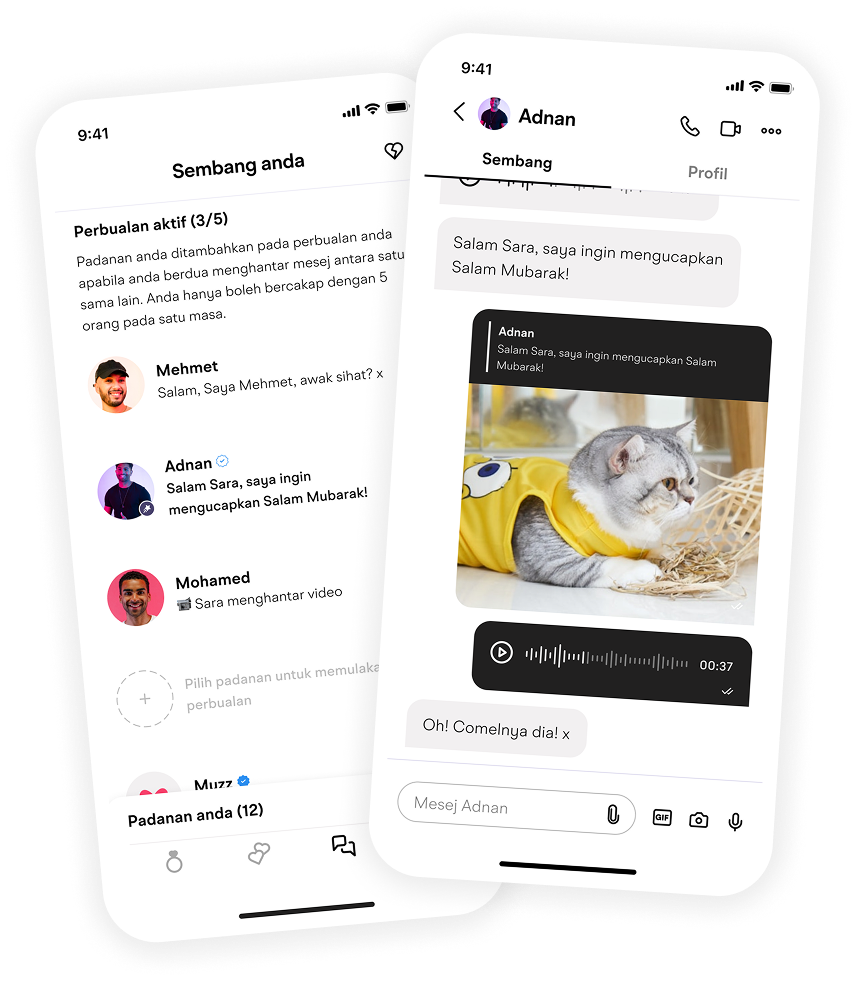
Sembang secara percuma

PERCUMA sahaja untuk melihat profil, padanan, sembang & kahwin di Muzz.

Muzz mockup image video_calling

Panggilan Video percuma

Anda pilih siapa yang boleh ditelefon tanpa perlu kongsikan nombor telefon.

Muzz mockup image voice_intros

Pengenalan Suara & Video Profil

Tunjukkan personaliti anda dan tonjolkan diri daripada orang lain dengan menambahkan Pengenalan Suara & Video Profil pada profil anda.

Muzz mockup image complete_privacy

Privasi Sepenuhnya

Sembunyikan foto anda dan gunakan nama panggilan untuk kekal awanama daripada rakan dan keluarga.

Muzz mockup image screenshot

Gambar anda milik anda. Sebarang tangkap layar tidak dibenarkan!

Anda tidak dibenarkan untuk tangkap layar foto pada aplikasi. Di Muzz, kami mahu anda berasa selamat tanpa perlu risau gambar anda jatuh ke tangan orang yang tidak dikenali. Ini termasuk rakaman layar!

Apa yang dikatakan oleh ahli kami

Review Stars

Cara ideal dan halal untuk bertemu calon pasangan.

Lulud Oktaviani

Lulud Oktaviani

Review Stars

Ini adalah tempat yang indah untuk bertemu wanita secara halal.

Bassy Bruno

Bassy Bruno

Review Stars

Saya jatuh cinta dengan aplikasi ini.

Rabia Shahab

Rabia Shahab

App Store iconGoogle Play icon
Muzz mockup image selfie_verification

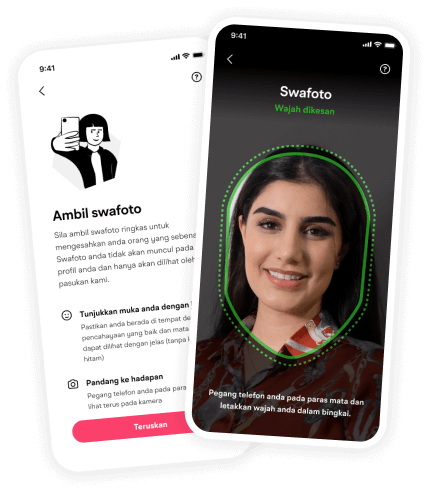
Pengesahan Selfie

Kesemataan anda dijamin dengan semua profil disahkan menggunakan Pengesahan Selfie, pengesahan SMS dan pemeriksaan lokasi.

Muzz mockup image filters

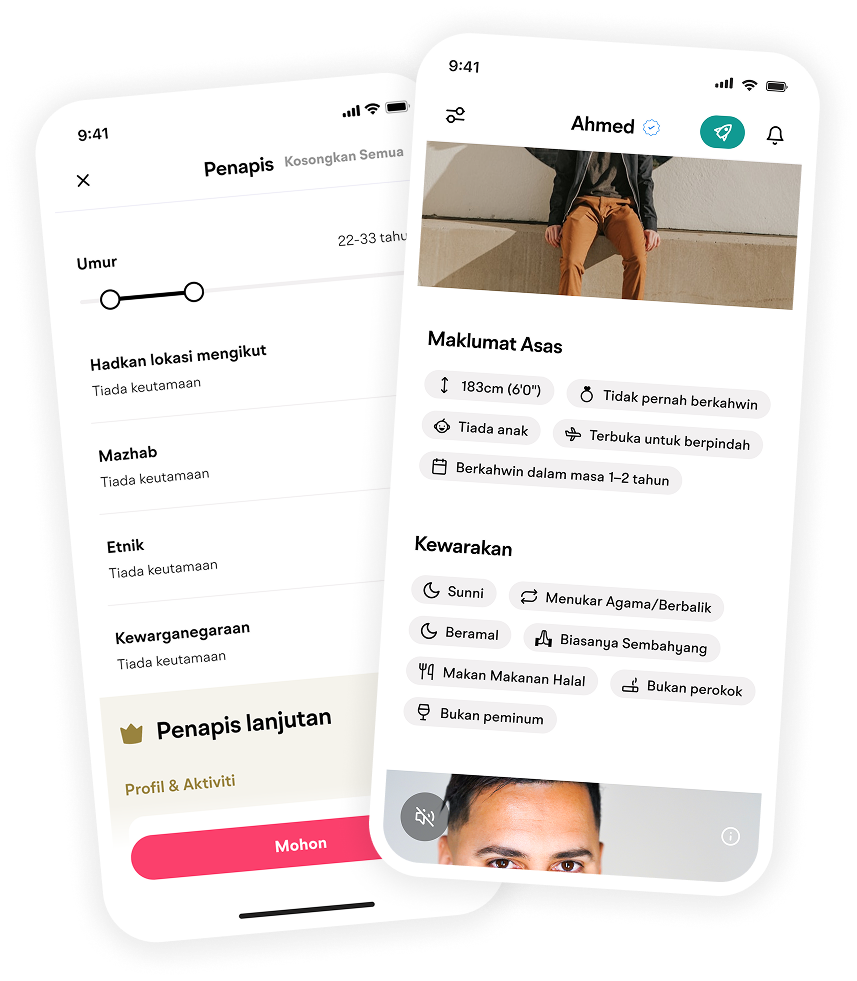
Penapis Agama

Tapis orang Muslim di kawasan anda melalui mazhab, kaum, bilangan waktu mereka bersolat dan banyak lagi.

Muzz mockup image chaperones

Wali

Anda juga boleh menyertakan Wali bersama dalam perbualan anda agar fikiran anda lebih tenang.

Muzz mockup image gold

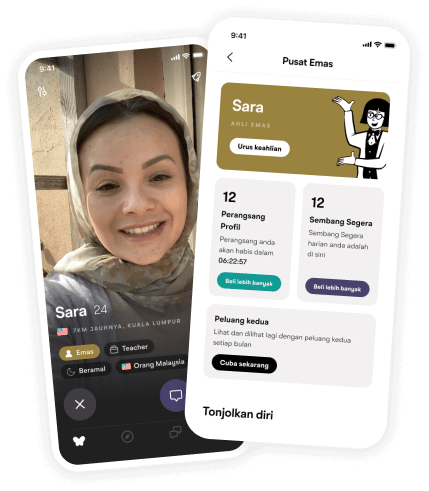
Emas Muzz

Berkahwin lebih cepat dengan Emas Muzz. Ini membolehkan anda menyesuaikan carian anda dengan lebih tepat dan menyemak imbas tanpa had.

Sudah bersedia untuk mencari pasangan Muslim anda?

We’ve been featured in

The Financial TimesGQThe BBCTechCrunchMensHealthThe New York TimesThe TimesTheThe Evening StandardCosmopolitanKonbiniLe Figaro

Untuk pertanyaan media, email ke [email protected]

Kisah Terkini

Article thumbnail

Comparing Young Men to Their Fathers Is Setting You Up for Disappointment!

What does it mean to be “stable” before marriage? 

Ask a group of young men why they are delaying marriage, and you’ll likely hear the same answer: “I want to be financially stable first.”

The idea of men being providers is everywhere. Social media constantly reminds men of this responsibility, while women are often encouraged to seek partners who can provide a comfortable life.

Sometimes, those expectations are shaped by what we grew up seeing at home. Many women admire the way their fathers provide for the family today and naturally hope for something similar in marriage.

The problem is that we often compare two men who are at completely different stages of life.

A father in his 50s or 60s has had decades to build his career, grow his income, pay off debts, and accumulate assets. A young man in his 20s is only beginning that journey. We shouldn’t measure them against the same standard.

Starting Line vs Finish Line

One of the biggest mistakes we make is comparing a young man’s beginning to his father’s journey outcome.

When people think about their fathers as providers, they often picture the finished version. The father who owns a house, drives a reliable car, pays the bills on time, and seems confident in handling life’s responsibilities.

What we don’t see is the version of that same man decades earlier.

Many fathers started their marriages from scratch. Some lived in rented homes. Some rode motorcycles because cars were unaffordable. Some struggled to make ends meet while raising young children.

The difference is that time has allowed them to build.

A man who has spent thirty years working, saving, investing, and overcoming setbacks should not be directly compared to a man who has only recently entered adulthood.

The comparison is unfair not because young men should be excused from responsibility, but because growth takes time.

Every father we admire today was once a young man trying to figure life out too.

“Zaman Dulu” vs “Zaman Sekarang”

The comparison goes beyond money. Many young men today are fighting battles their fathers never had to face at the same scale.

Previous generations certainly had their own challenges, but they did not grow up with unlimited access to distractions. Younger men today live in a world where social media, quick content and endless entertainment whether good or bad are available 24/7. 

This does not excuse poor behaviour. Men are still responsible for managing their habits and good self-discipline.

However, it does explain why maturity today may look different from previous generations.

Younger men are not delaying marriage because of their fear of commitments. Some are delaying marriage because they understand well that they still have personal battles to overcome.

A man who acknowledges his weaknesses and actively works to improve himself may be demonstrating more maturity than someone who ignores his flaws entirely.

The goal is not perfection before marriage. The goal is growth, self-awareness, and willingness to take responsibility.

Income vs Responsibility 

When people talk about stability, the conversation usually revolves around income.

How much does he earn? Can he buy a house? Can he support a family?

These are important questions but reducing stability to a financial figure alone misses the bigger picture.

A man earning a high income can still be emotionally unstable, financially irresponsible, or trapped in destructive habits. Likewise, a man earning a modest income may possess emotional maturity, financial discipline and a sense of responsibility.

Marriage requires more than money. It requires patience and self-control during conflict, hardship, temptation and the ability to consistently show up for one’s family.

Financial stability matters but so does emotional, mental, and spiritual stability.

Perhaps the better question is not whether a man has reached a particular income level but whether he is becoming the type of man who can be trusted with greater responsibility.

Labour vs Lifestyle 

The differences between generations can be physical too.

Many fathers grew up in environments where movement was naturally built into daily life. Jobs were often more physically demanding. Walking was more common. Leisure activities involved spending time outdoors rather than sitting in front of a screen.

Today, many young men spend most of their day sitting. They work at their desks, commute by car, and spend their free time consuming digital content.

As a result, maintaining good health is no longer automatic. It requires deliberate effort. Exercise must be scheduled. Nutrition must be monitored. Sleep must be protected.

Being physically fit today often requires more intention because inactivity has become the default lifestyle.

This does not mean previous generations had it easier. It simply means the challenges have changed. Different environments produce different struggles.

Same Game, Different Rules

Another factor often overlooked is the economic environment.

Many fathers built their lives during a period where the financial realities were different. Housing was more affordable relative to income. Education costs were lower even though harder to obtain. The cost of raising a family was significantly different from what many young couples face today.

This is not to diminish the sacrifices made by previous generations. Life is difficult in many ways.

But it is equally important to recognise that the financial ladder our fathers climbed may not be standing in the same place anymore.

Young men today are navigating rising living costs, increasing housing prices, and an economy that often feels less predictable than before. Expecting identical outcomes under different circumstances ignores an important reality.

Different generations are playing the same game on different difficulty settings.

Direction vs Destination 

Perhaps the biggest problem is that we remember our fathers selectively. We remember their sacrifices, their strength and their ability to provide.

What we often forget are the years of uncertainty, mistakes, fears, and personal growth that came before those achievements.

Time has a way of polishing our memories and making us forget the long journey that created it. The truth is that every father we admire today was once a young man with insecurities, weaknesses, and unanswered questions about the future.

Rather than asking whether a young man is already like your father, perhaps a better question is “Is he moving in the same direction?”.

Because the goal of marriage is not to find someone who has already reached the finish line. The goal is to build a life together with someone who is willing to keep moving forward.

It is always important to be realistic when in a relationship. Be respectful, be kind, and build the life that you want together. A home built on a strong foundation lasts forever. If you are still searching for a spouse, download Muzz today

Article thumbnail

Travelling Is An Overlooked Green Flag 💚

When it comes to cari ‘jodoh’ or the right partner, we always thought of finding someone who thinks the same way, comes from a similar background, and shares the same hobbies, values, or expectations. Especially in modern Muslim relationships, people often search for “compatibility” by looking for shared similarities & faiths.

Same lifestyle. Same hobbies. Same expectations.

Sounds pretty much compatible, right?

But long-term relationships, especially within multicultural Muslim communities, require something much deeper than similarity. They require flexibility, empathy, emotional maturity, and the ability to accept differences with patience and respect.

Strangely enough, travel lowkey teaches exactly that.

Traveling is not a green flag because someone has been to more countries. It becomes a green flag because of what meaningful travel teaches a person when comfort disappears, plans fall apart, and they are forced to meet parts of themselves they usually don’t see.

Travel Teaches There Is Not Only One “Right” Way to Live

Because one of the first things travel does is destroy the belief that there is only one “right” way to live.

When you step out of the comfort zone you always live in, only then do you realise families function differently. People express love differently. Even within Muslim communities, faith is practiced with cultural differences that shape daily life. What modesty looks okay to us, it might be different across countries. Family expectations may vary from one household to another. Success may be defined in ways that challenge your personal assumptions.

That kind of exposure softens rigidity; it makes you think that the world really doesn’t revolve around your thoughts and expectations. 

Instead of entering relationships with the mindset of “My way is the correct way”, travel teaches a far better question: “Can we understand each other’s way?”

That question matters far more in marriage than people realize. The ability to tolerate each other’s differences creates room for adaptability and compromise, allowing both people to grow together without forcing one another to abandon their values or identity.

Travel Builds Empathy and Emotional Maturity

Then comes empathy, something travel teaches far better than a daily routine ever could. Because travel is rarely as aesthetic as Instagram posting makes it look. The truth is, travel might look like: 

Missed train rides Wrong directions Language barriers Homesickness Awkward silence

Honestly, that discomfort teaches patience and humility. Those hard times show people what vulnerability actually feels like. When you have experienced being misunderstood, you become slower to judge others. You become softer. You stop assuming everyone should think, react, or communicate the way you do.

A partner who chooses compassion over assumptions will always be a stronger green flag than someone who simply shares the same hobbies.

Travel Creates Self-Awareness

Travel also does something people underestimate: it forces self-awareness. Especially when it comes to solo traveling.

When you are away from others and a similar routine, there is nowhere to hide behind familiarity. No usual distractions. No predictable environment. Just you, your thoughts, your reactions, and your habits.

You start noticing what stresses and comforts you. How you react under pressure. Where your emotional triggers lie. From these, you discover boundaries. Your coping patterns. Sometimes, even the unhealthy habits you carry into relationships. This matters because people who know themselves make better choices.

They know what they need. They know what they can offer. They know what kind of partnership they are actually ready for, not just what looks good on paper & social media. That level of self-awareness is a value that we should take into consideration when choosing a life partner. 

Travel Reveals Financial Responsibility

Trips require budgeting, prioritizing expenses, and choosing between needs and wants. Accommodation, transport, emergencies, and the unexpected costs during travel quickly expose whether someone is impulsive or disciplined, wasteful or mindful. Financial habits matter in marriage more than people like to admit

A partner who understands moderation, plans wisely, and handles financial stress without emotional chaos often brings far more security into a relationship than someone who only looks good in travel photos.

Stability is attractive too. Perhaps the biggest misconception in modern dating is the belief that compatibility means finding someone exactly the same

In Muslim marriages today, families are often blended across cultures. Expectations around gender roles may differ. Careers shape lifestyle choices. Both tradition and modern life influence personal values.

Similarity may make the beginning easier, but flexibility is what sustains the relationship and traveling trains that flexibility. It teaches people how to adapt, how to listen, and how to grow without needing control over every situation.

On apps like Muzz, where intention matters more than impression, even something as simple as travel can become a quiet filter for compatibility when used with purpose. It is not about ticking boxes or looking for someone who has been everywhere it is about understanding how someone experiences the world, and whether that aligns with the kind of life you are building.

Article thumbnail

5 Low-Pressure Dating Ideas To Meet Someone New

If you have been in a dating scene, you would know that it is very common for men and women to have a push-pull internal conflict on the first date. The men would have thought of having to plan for a perfect first date, or else they will be perceived as a low effort man. Women, on the other hand, would run all worst-case scenarios in their head and end up being cautious about their safety, the vibe, and “is he the one?”

We get it, the first date can be overwhelming. You tend to hold to the idea that first impressions matter without realizing that you are exhausting yourself. If that very date didn’t work out, you will get devastated, ghost everyone, and complain about being single, for the 100th time.

This time around, let’s change up that strategy. We crafted a 5-step process for you to go out on a date that is low-pressure but not low-effort. Make sure to try this on your upcoming date!

1. Pick A Cozy Place

This is by far one of the simplest things you can do, but almost everyone doesn’t pay attention to this. The place where you meet someone sets the tone and mood for the conversation. Choose the cafe that will help the process of getting to know someone. If you want quiet and cosy, find home-based cafes that usually lesser crowd, that allows you to talk without noise disruption. If you feel the need to do something while chatting, find cafes that provide board games to help you feel less awkward.

You can do this by search the cafe on TikTok and see which cafes will help you to carry the conversation the best.

2. Walk The Talk, Literally

We get it, sitting in a restaurant or cafe isn`t for everyone. The moment you sit in front of the person you are meeting, the anxiety creeps in, and suddenly your brain goes blank. For those of you who have this issue, combine the talking part with an activity. The simplest way to do this is to grab a light food & drinks and walk around any park. The movement will help regulate your nervousness, and suddenly the conversation flows naturally.

Plus point to this is that you can witness humans with all kinds of behaviors in the park. You ran out of ideas to talk? Use anything that you saw and create a conversation out of it.

3. Prepare 3-5 Backup Topics

As this is the first date, you don`t have any information about this person. The possibilities of asking questions are endless at this stage. At times, you overthink about questions you want to ask, and you end up not asking. This is when you can use AI to help you.

Instead of asking ChatGPT “what are the red flags of men on a first date”, how bout you tweak the prompt and ask “Hi ChatGPT, what are the questions that I can ask on my first date?”. That simple switch opens up limitless opportunities for you.

4. Dress Code

This is an interesting dynamic that both genders would need to play their role equally. Men are simple creature, where a t-shirt and jeans suffices them for a first date. Women, on the other hand, want to put on their best dress and judge men by their outfit.

It is unfair for men to be judged solely by their attire and for women to expect men to dress up the way they want them to. Instead, just inform them of the dress code when deciding on the first date. This way, men get a fair share to dress themselves and the women don`t have to be stressed over the men’s attire.

5. Follow Up After

Not all first dates will get to a second date, and that is fine! The purpose of the first date is for you to get to know each other. That awkward moment, not knowing what to ask, and being in character will let you know the vibe of the relationship. Let’s be real, vibe is something you can`t get through chat, and you can only feel the vibe once you meet that person. If you don`t vibe, thank them and part ways. If you vibe, compliment them, and plan for the next date.

As part of safety measures, Muzz encourages you to have the conversation from planning the date up to following up in the app itself. We have 24 hours community team who are always there to respond to any mischievous or ill-intentioned behaviours. Once the conversation gets outside of the Muzz app, our community team wouldn`t be able to help you, as we have no evidence of the conversations that happen in the other app.

Be open, have fun, keep the conversation in the Muzz app, and share with us how your first date went!

Aplikasi Perkahwinan Orang Muslim
Orang Muslim yang bujang
Aplikasi Orang Muslim yang Bujang
Gerbang Perkahwinan Orang Muslim
Berpacaran islamik
Orang Muslim Syiah
Orang Muslim Ahli Sunah
Berpacaran Orang Muslim
Cinta Arab
Sembang Arab
Aplikasi berpacaran orang muslim
Berpacaran Arab