Muzz logo

Where Muslims meet

Continue to main content arrow

500,000 Successes

15 million Muslims

The app connecting Muslims worldwide

Where Muslims meet

We are the leading Muslim dating and marriage app with over 15 million single Muslims looking for love.

We’re not like the other dating apps. We made Muzz to help single Muslims find their perfect partner while respecting their religious beliefs. Say goodbye to boring biodata CV’s and pushy aunties! We bring together more than 500 happy Muslim couples every day and celebrate over 600,000 Muslim success stories worldwide.

Could you be next? Sign up and start meeting single Muslims today!

Muzz mockup image chat

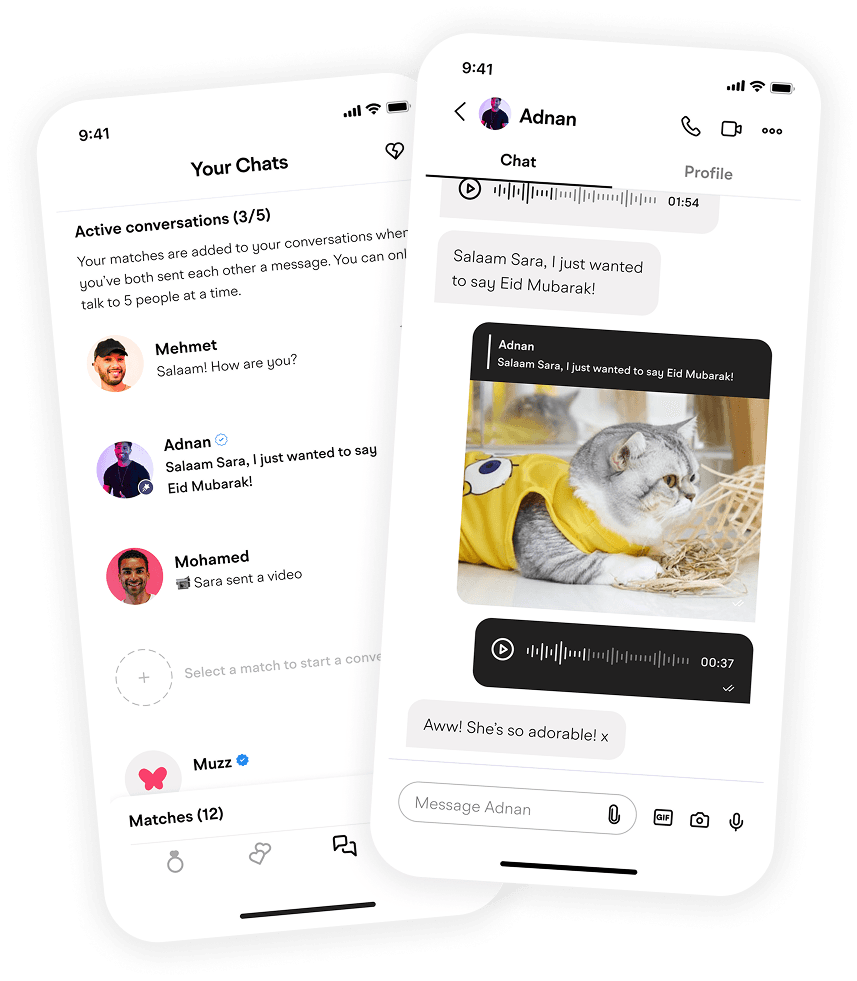
Chat for Free

It’s always FREE to see profiles, match, chat & marry on Muzz.

Muzz mockup image video_calling

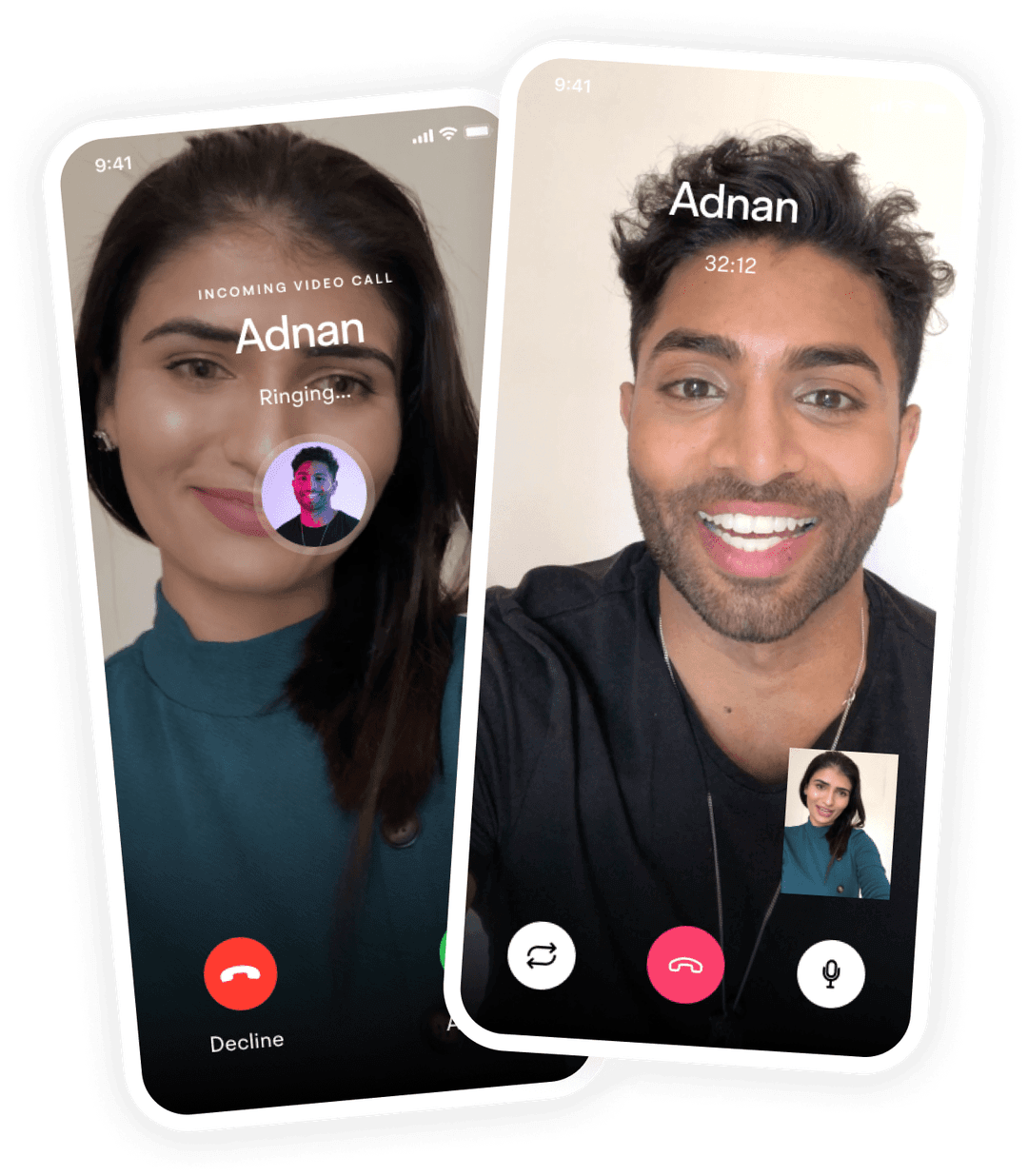
Free Video Calling

You decide who you can call and you never have to share your phone number.

Muzz mockup image voice_intros

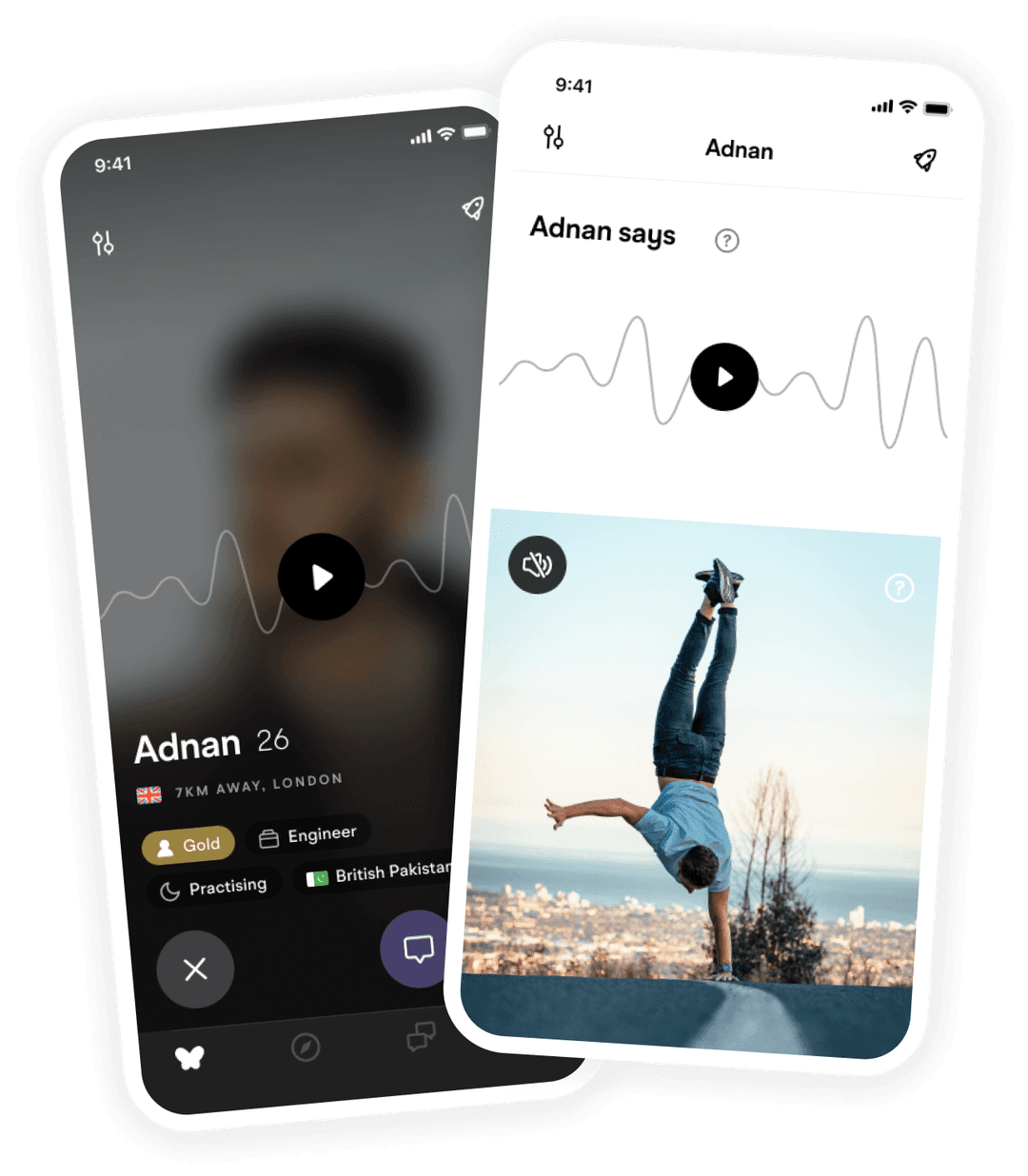
Voice and Video Profiles

Show off your personality and stand out from the crowd by adding Voice & Video intros to your profile.

Muzz mockup image complete_privacy

Complete Privacy

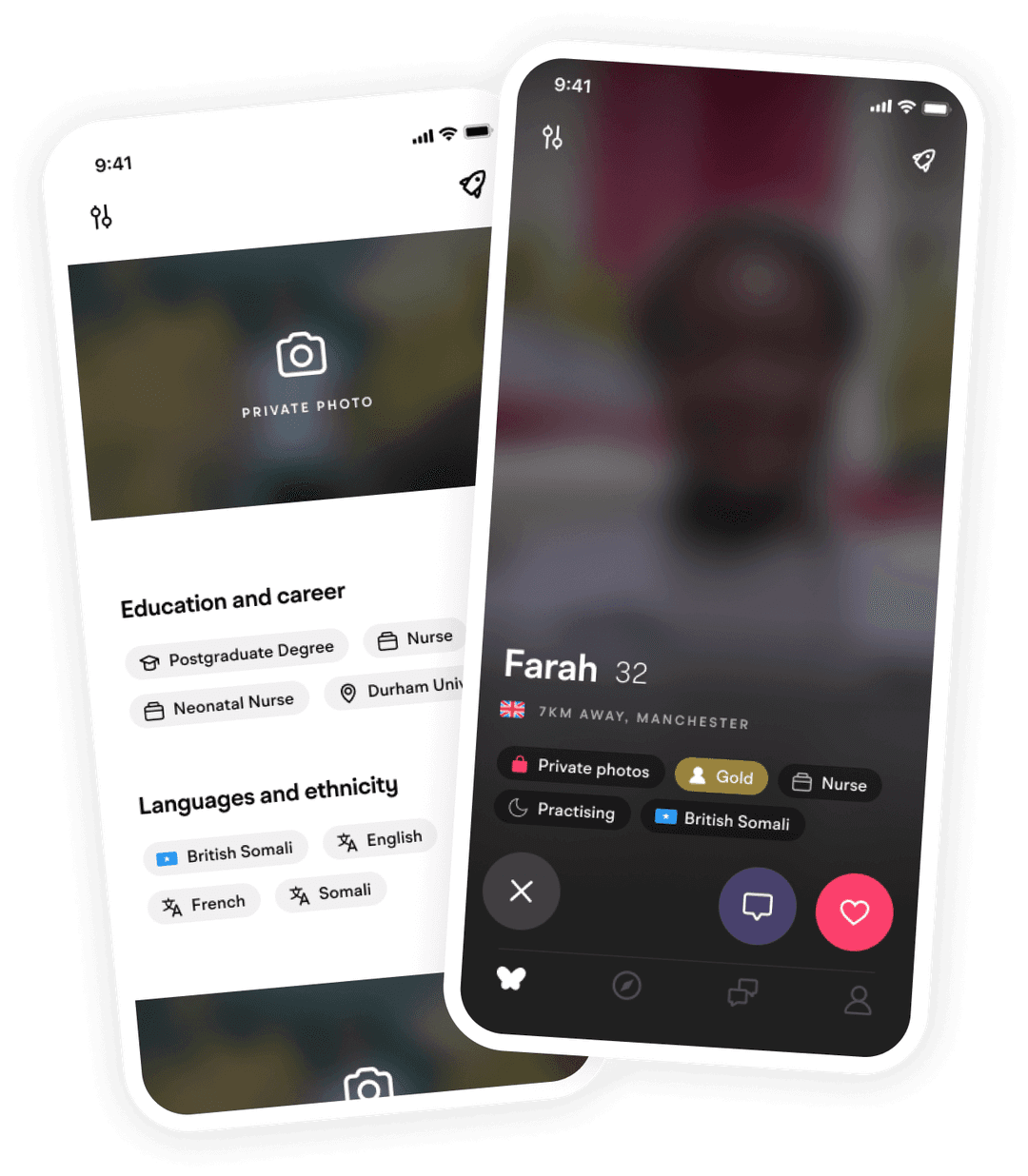
Keep your photos hidden and use a nickname to remain anonymous to friends and family.

Muzz mockup image screenshot

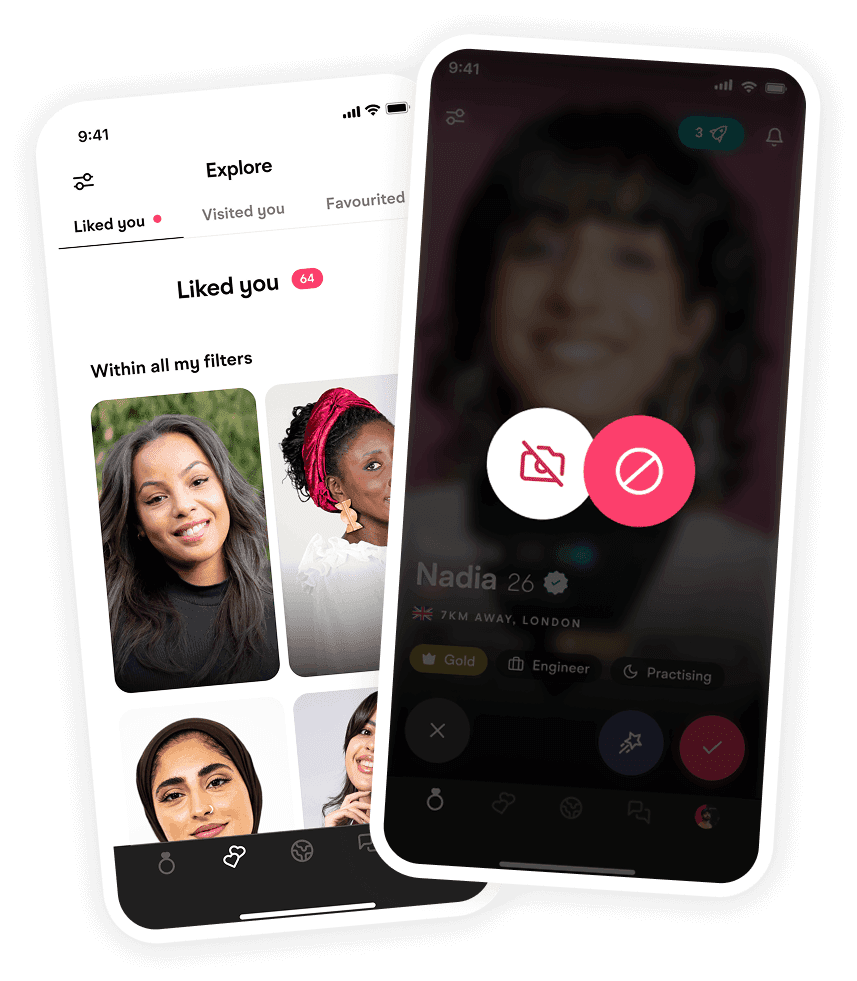
We block screenshotting!

We now stop people from taking screenshots of your photos. We want you to feel safe in Muzz and not worry about your photos getting into the wrong hands. This includes screen recording as well!

What our members say

Review Stars

Ideal and halal way to meet a potential spouse

Lulud Oktaviani

Lulud Oktaviani

Review Stars

It's a beautiful place to meet women in a halal manner

Bassy Bruno

Bassy Bruno

Review Stars

I'm falling in love with this app

Rabia Shahab

Rabia Shahab

Muzz mockup image selfie_verification

Selfie Verification

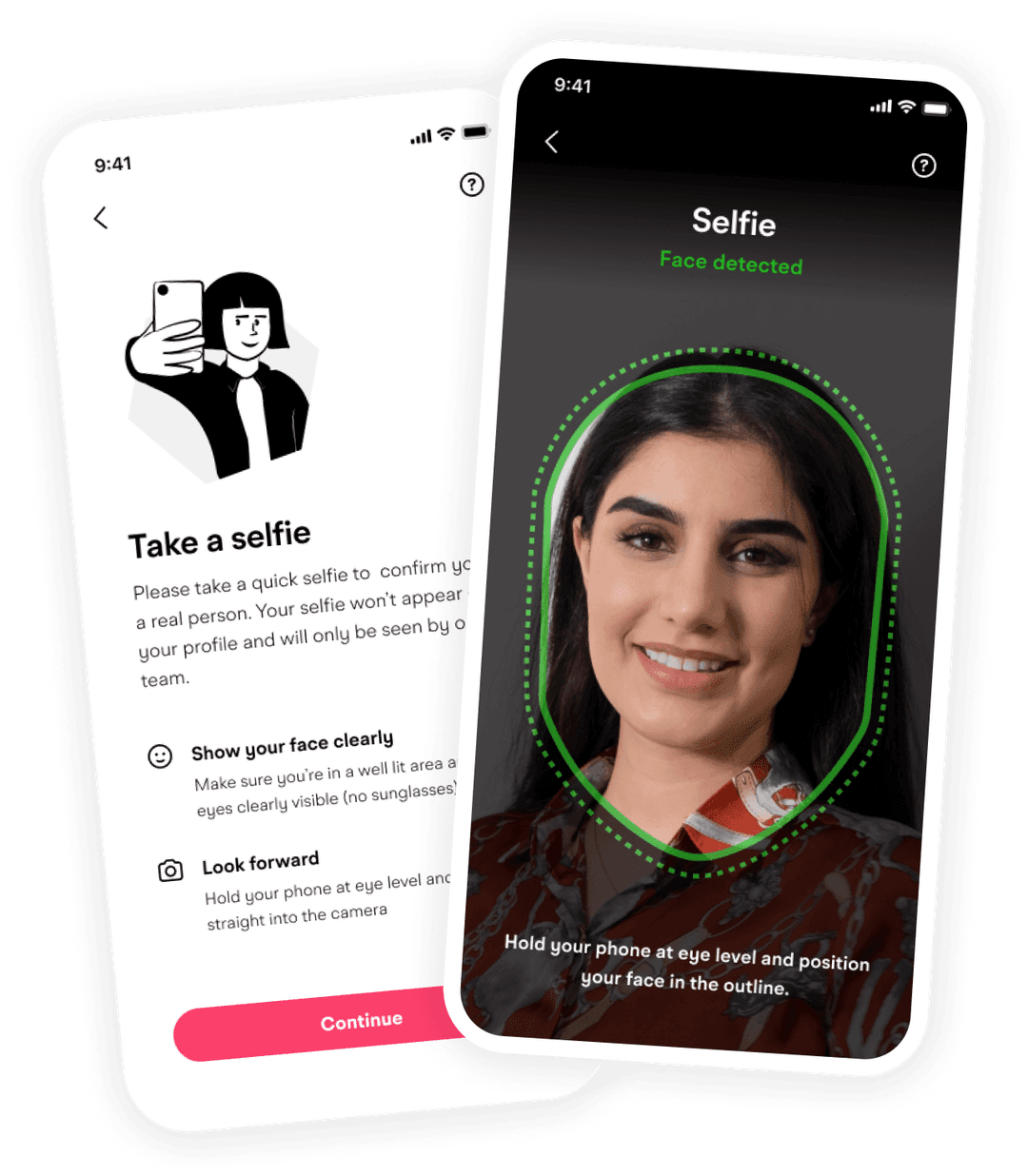
With all profiles being verified using Selfie Verification, SMS confirmation, and location checks, you’re safe.

Muzz mockup image filters

Set your Search filters

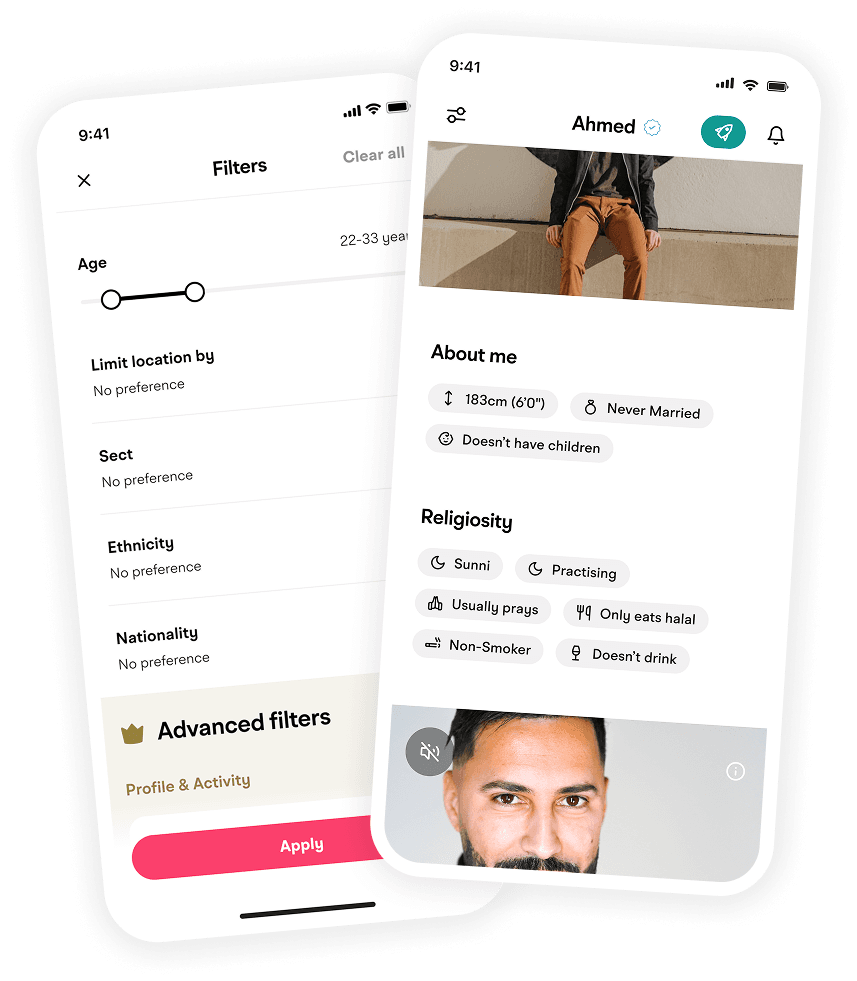
With our powerful filters tool, you can tell us exactly the kind of person you're looking for. Set your preferences to get more quality matches and streamline your search for ‘the one’ - all for free!

Muzz mockup image chaperones

Chaperones

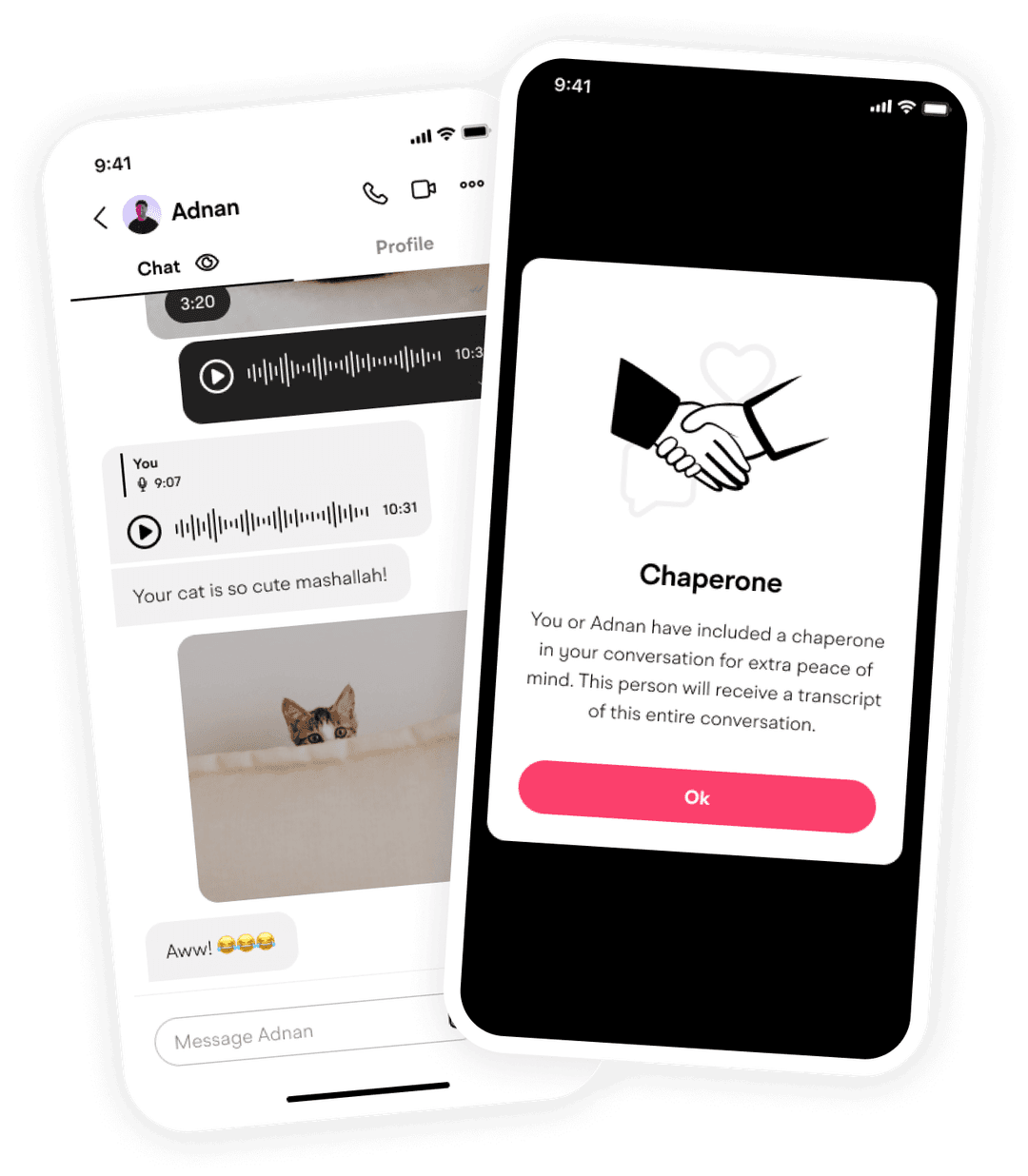
You can even include a chaperone (known as a Wali) in your conversations for extra peace of mind.

Muzz mockup image gold

Muzz Gold

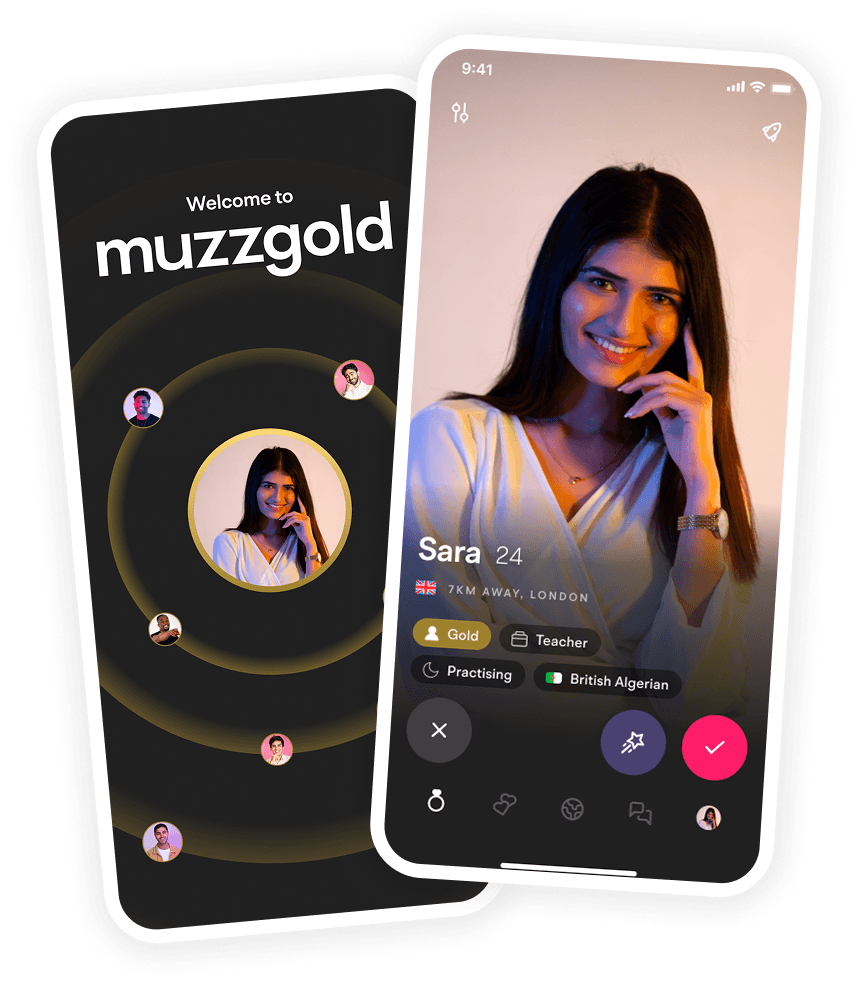
Get married faster with Muzz Gold - allowing you to more precisely tailor your search and browse without limits

Find Out More

We’ve been featured in

The Financial TimesGQThe BBCTechCrunchMensHealthThe New York TimesThe TimesTheThe Evening StandardCosmopolitanKonbiniLe Figaro

For press enquiries, email [email protected]

Latest Stories

Article thumbnail

Do Muslim Parents Accept Marriage Outside Their Ethnicity? We Asked Six Elders.

American Muslims are the most racially and ethnically diverse religious community in the United States: no single racial or ethnic group forms a majority, and only 35% worship in congregations where most people share their background. When Muzz asked six elders whether they would accept a child marrying outside their ethnicity, all six said yes — and every one of them named shared faith, not ethnicity, as the condition.

We took a camera into the community and asked the generation everyone assumes is the obstacle: would you let your child marry outside your ethnicity?We expected hedging. We expected “well, it depends.” We expected at least one uncle to change the subject.Here’s what six elders with six versions of the same answer. And not one of them was about race or ethnicity.

What six elders actually said

We asked aunties and uncles in our community a single question and let them talk. Here is what came back, unedited:

“No, I’ll be okay with that — as long as they’re Muslim.” “I believe they’re gonna be successful. They have the same background, religion. So that’s what I would push my family to get married to.” “As long as they’re Muslim, yes. Because as long as they’re Muslim, they’re following the deen — then of course it doesn’t matter.” “The skin color does not. Ethnicity does not matter.” “Yes, I’ll be okay — as long as she is Muslim, and as long as she knows the value of marriage.” “And she loves him and takes care of him, of course. And the most important thing is that she knows about religion.”

Watch the video here: https://www.tiktok.com/@muzz_app/video/7655405246797073677?lang=en Six for six. Every elder named faith as the condition. Not one named ethnicity, language, or country of origin.If you have been rehearsing a speech for your parents in the shower for the last two years, sit with that for a second.

How ethnically diverse are American Muslims?

More than any other religious community in the country — and it is not close.Pew Research Center’s 2023–24 Religious Landscape Study, based on more than 36,000 respondents, found that no single racial or ethnic group forms a majority among U.S. Muslims. Roughly 30% are White (a category that currently includes Arab and MENA respondents under Census methodology), 30% Asian, 20% Black, 11% Hispanic, and 8% identify with another race or with more than one. Nearly six in ten Muslim adults in the U.S. (59%) – were born outside the country.The Institute for Social Policy and Understanding reached the same conclusion from a different direction: of every religious and non-religious group it surveyed for its American Muslim Poll, Muslims were the only one without a majority from a single racial or ethnic background.American Muslims are also young. Pew found roughly 35% are between 18 and 29 – a far larger share of the community sitting squarely in the marriage-search years than in most religious groups in the country.

Look at where American Muslims actually pray

This is the number that explains why the question in our video comes up at all.Pew found that two-thirds of Americans who attend religious services worship alongside congregants who mostly share their own race or ethnicity. Among Muslim Americans, only 35% do. Twenty-six percent attend congregations where most worshippers are a different race than they are, and 39% attend congregations where no single racial group holds a majority.Translation: the average American mosque is one of the most ethnically mixed rooms in American religious life. The person standing beside you in the saff on Friday is statistically unlikely to share your background.Marrying “outside your ethnicity” is not an edge case for this community. Given where we pray, where we study, and where we work, it is close to the default condition.

How common is interethnic marriage in the U.S.?

Common, and rising sharply. Pew’s most comprehensive analysis of Census Bureau data found that 17% of U.S. newlyweds in 2015 — one in six — married someone of a different race or ethnicity. In 1967, the year Loving v. Virginia was decided, that figure was 3%. A more than fivefold increase in under fifty years.The detail that matters most for our community is what happens across generations. Intermarriage rates among U.S. born adults run dramatically higher than among the foreign-born. In the same analysis, 46% of U.S. born Asian newlyweds and 39% of U.S. born Hispanic newlyweds married someone of a different race or ethnicity.Set that against the 59% of American Muslim adults who were born abroad, and the shape of the thing becomes clear. Many of our parents arrived from countries where marrying within the community was simply how it worked. Their children were raised in mixed mosques, mixed schools and mixed cities. The gap in the video is not a “values” gap. It is a generational and geographic one — and the data says it closes.Location matters too. Pew’s regional analysis found intermarriage highest in the West, where 22% of newlyweds married across racial or ethnic lines, compared with 14% in the South, 13% in the Northeast and 11% in the Midwest.

So why do some families still hesitate?

Because our elders answered a question in principle, and families live in practice — and the gap between those two things is where most of the pain in this conversation sits.When a parent hesitates, the objection is usually not about faith at all. It is closer to:

Language. Will my grandchildren be able to talk to me? Continuity. We carried this culture across an ocean. Does it stop here? The extended family. Not “what do I think,” but “what will they say” — the aunt back home, the cousins, the community that still has an opinion from six thousand miles away. The unfamiliar. A wedding they do not know how to host. In-laws they do not know how to talk to. Customs and expectations they cannot predict. Colorism. Which deserves to be named plainly, because it is present in many of our communities and it causes real damage.

Almost none of those are religious concerns. Most of them are fear of the unfamiliar — and fear responds to exposure and time far better than it responds to debate.Knowing that before the conversation changes what you are actually arguing about.

How to talk to your parents about marrying outside your culture

Six things that tend to work better than the speech you have been rehearsing:

Lead with character, faith and family. Open with how they practise, how they treat their own parents, what they want their life to look like. That is the criterion the elders in our video named without prompting. Find out what the actual objection is. “Is this about their deen, or about how it’ll feel for the family?” Both are worth taking seriously. They are not the same conversation and they do not have the same answer. Let them meet the family, not just the person. Most of what parents fear is the unknown extended family rather than the individual in front of them. Meeting resolves more than arguing does. Bring in a trusted elder early. Someone your parents already respect changes the temperature of the room more than any argument you make yourself. Address the practical fears directly. Language, holidays, where you’ll live, how the wedding works. Vague reassurance does not land; specifics do. Give it time and repetition. A first no is very often a first reaction. The elders in our video were not persuaded on camera — they already held that view. Plenty of others get there slowly. Frequently asked questions

How ethnically diverse are Muslims in America?More diverse than any other U.S. religious group. Pew’s 2023–24 Religious Landscape Study found no single racial or ethnic group forms a majority among U.S. Muslims: roughly 30% White, 30% Asian, 20% Black, 11% Hispanic and 8% another or multiple races. ISPU found Muslims were the only group it surveyed without a majority from one racial or ethnic background.Do Muslim parents accept marriage outside their ethnicity?Attitudes vary by family and community, and no survey speaks for every household. In the six elder interviews Muzz filmed, all six said yes — and each named shared faith rather than ethnicity as their condition.How common is interracial marriage in the United States?Pew’s analysis of Census data found 17% of U.S. newlyweds in 2015 married someone of a different race or ethnicity, up from 3% in 1967. Rates are substantially higher among the U.S.-born: 46% of U.S.-born Asian newlyweds and 39% of U.S.-born Hispanic newlyweds.Do American Muslims mostly pray alongside people of their own background?No. Pew found only 35% of Muslim Americans worship in congregations where most people share their race or ethnicity, compared with two-thirds of Americans overall. Thirty-nine percent attend congregations where no racial group is a majority.Why do some Muslim families object to interethnic marriage?The concerns families raise are usually cultural rather than religious — language, continuity, extended-family opinion, unfamiliarity with different wedding and in-law customs, and in some communities colourism. Attitudes on interracial marriage have shifted substantially across American society within a single generation.Is marrying outside your ethnicity permitted in Islam?Questions about religious rulings are best taken to a qualified scholar or your local imam, who can address your specific situation — Muzz does not issue religious guidance. What we can report is what our community’s elders told us on camera, and what the data shows about how American Muslims actually meet, pray and marry.Does Muzz let you filter by ethnicity?Yes — Muzz includes filters for ethnicity, language, sect and practice level. They exist so you can find someone you connect with, not to wall you off from anyone. You can widen them or switch them off whenever you want, and plenty of our couples matched after doing exactly that.

The takeaway

We went looking for the generation gap and could not find it where we expected. Six elders, one condition, and it was never about where anyone’s family came from.Whatever conversation you are dreading at home, it may not be the conversation you think it is.Muzz is the world’s largest Muslim marriage app, with filters for ethnicity, language and background.Download now.

Article thumbnail

Her Students Put Muzz on Her Phone as a Prank. Then This Happened 👀

A Muzz Couple Story — Atlanta ↔ Chicago

Everybody’s got a take on the apps. “They don’t work.” “Nobody’s serious.” “I’d never.”Amira Thomas had that take too. For five years.Here’s the thing though – she didn’t even download Muzz herself. Her students stole her phone and put it on there as a prank. (Never underestimate a MIST team.)A singer-songwriter and producer from Atlanta, Amira wasn’t exactly lacking. She coached her high school’s MIST team, led sister halaqahs, and came from a tight, creative, deeply involved family in the Atlanta Muslim community. Her life was full — mashallah full.

Why’d She Keep Deleting the App?

For five years, Amira downloaded Muzz, deleted it, and downloaded it again. “The other times, it was more just confirming my bias,” she admits. Brothers weren’t putting effort into their profiles. The ones who did couldn’t hold a conversation past salams. She’d get frustrated, then land back at peace: she had friendship, family, community — and faith that the rest was in Allah’s timing.But two things shifted. A real conversation with her mom — about self-esteem, about not actually putting herself out there. And her career: she didn’t want to be on the road as a singer and still not have found her person. “I’ve got everything I want, and no one to share it with.”So she made a list. Emotionally available. Serious but goofy. Passionate. Wealthy didn’t make the list.Then one night, watching Mad About You, she thought: I want to be in love. And downloaded Muzz one more time.

Meanwhile, in Chicago…

Suleiman Thomas’s road to that same moment was longer — and rougher.Born and raised in Chicago in a first-generation Muslim family, Suleiman was a D1 soccer player headed pro. Recruited to a boarding school at fourteen. Lived away from home through high school and college. Trained across the country and in Europe. “You never think you’re not going to make it. You’ve always been in the small percentages.”Then he broke his foot — right before the flight to join a professional team.The years after forced a reckoning. Who was he without soccer? He’d spent his whole life in the grind, no time for internships, no plan B. A marriage ended in the same stretch. “Both the divorce and the end of my career happened over a short period of time. I really had to do some soul searching.”His dad gave him exactly one month to mope. His boys tried to cheer him up — “not helpful at all.” But one friend did something that actually was: he put Suleiman on Muzz.Because here’s the reality for a lot of first-gen Muslim families: there’s no auntie network. No long list of rishtas waiting. “Muzz is critical for people who don’t have traditional Muslim communities in their families,” Suleiman says. “How else would we have connected?”He gave it six months. Then went quiet — app still installed, just untouched.

One Email. That’s All It Took.

A month into his hiatus: Amira liked your profile.He could see her face and her city, and that was it. He reactivated, set his filters to Atlanta, and — instead of paying to unlock the match — swiped for a full hour until he found her again. (Respect the hustle.)Then he sent the first message: “Salams — I’ve been off the app for a while and saw your notification via email and had to reach out.”Amira was on the treadmill when it came through. She lowered her incline to reply, then moved to the weight room so she could keep typing. Why had she swiped on him in the first place? His profile had an intro video — and his smile, plus a slightly awkward laugh, caught her. His was the last profile she saw before getting off the app for good. “I knew immediately it was him.”Plot twist: her age filter should’ve hidden him completely. Qadr is not playing about the details.Their first phone call lasted five hours. They haven’t stopped talking since.

After the Talking Stage… Then What?

The similarities got almost eerie. Birthdays one day apart. Same favorite donut flavors. Same approach to disagreements. Both had voice-noted friends breaking down Love Is Blind.Two weeks in, they were talking marriage. At one month, Amira said “I love you” first — technically. On the morning of her mom’s birthday, mid-Mean Girls discussion, she slid in: “make fetch happen for sure — ily.” He caught it immediately. He’d been circling it too — “I have a HUGE crush on you” texts and paragraph-long messages that said everything except the actual words.But talking is one thing. Doing it right is another.Amira’s dad is the gatekeeper, and she was terrified to tell him. Her mom spent a month strategizing — then one day, when he happened to start talking about the value of family, she seized it: “NOW. NOW.”His questions came fast — Where did he come from? How long has this been going on? — but under all of it was one thing: making sure Amira ended up with someone who valued her as much as he did.From there, both families did it properly, adapted for distance. Her mom spoke with his mom. Her dad with his dad. And since Atlanta and Chicago are 700 miles apart, their chaperoned dates happened online — parents in the room. “They wanted to give us our space. They just wanted to be around.”The families clicked instantly. Even coming from different traditions — he’s from a Sufi background, she’s Sunni — there was zero conflict. The hardest part came after: Amira leaving Atlanta. “Everyone was sad. My dad was heartbroken.” She’s been back five times already — and Suleiman, deeply emotionally intuitive, has helped carry the weight of that transition.

So What Does It Look Like Now?

Mornings in Chicago: Suleiman heads out early to drive a school bus for special-needs kids. Amira makes breakfast. They watch something light and hyper-analyze it together — she calls him her anchor. Fridays are for the mosque; weekends he plays soccer while she works on her music. Sometimes he makes up songs about her and just starts dancing. There’s a lot of play, a standing arm-wrestling rivalry, and a genuine competition over who can out-nice the other.“We both have a lot going on,” Suleiman says. “So we’re intentional about making space for each other.”Watch our instagram feature here: https://www.instagram.com/p/DZ0KAeHygef/ 

Still Searching? Read This Twice.

Amira: “There are billions of people — you only need one. Allah is still preparing them for you. Maybe your person is going through a transition period right now. Say Alhamdulillah, and know your person is out there.”Suleiman: “There’s no fast-forward to marriage. The only lose condition is marrying the wrong person — and everything we’ve been prescribed as Muslims is designed to avoid that. Do what you can in your control, and leave the rest to Allah.”

Amira and Suleiman met on Muzz. Your person might be one notification away.

Article thumbnail

Spain’s World Cup Win: A Lesson in Faith and Intention

After defeating Argentina in the final 1-0, Spain lifted the trophy for the second time in their history. While the result will be remembered for the skill, discipline and determination shown throughout the tournament, Spain’s victory also carried a bigger significance for many Muslim supporters; it became connected to conversations around solidarity and hope.

Why Spain’s victory resonated with Muslim communities worldwide

Throughout the tournament, Spain became a team that a lot of Muslims felt connected to. This connection was influenced by Spain’s broader public position on Palestine, including its decision in 2024 to formally recognise the State of Palestine alongside Ireland and Norway. The move was described by Spanish Prime Minister Pedro Sánchez as part of a push towards supporting a peaceful resolution to the conflict.

Moments of solidarity also resonated with Spanish footballer Lamine Yamal drawing global attention after waving a Palestinian flag during Barcelona’s La Liga title celebrations, an act that was praised by many Palestinian supporters, football fans and activists online.

Yamal’s background also reflected the multicultural identity of modern Spain. Born in Catalonia to a Moroccan father and Equatorial Guinean mother, the 19 year old has previously spoken about his Muslim identity and experiences with Islamophobia in football.

Football brings people together in this unique sense, creating a space where people can find connection in unexpected places.

Better days ahead

In Islam, the concept of sabr represents patience and trusting in Allah’s plan. The journey towards any achievement is rarely immediate, whether it is a football team working towards a championship or an individual searching for their life partner, progress requires patience and faith.

Spain’s World Cup campaign was built on the same principles. Behind the celebrations were years of preparation and resilience, and motivation shaped by commitment and belief in a shared goal. And with millions of Muslims across the world searching for marriage, the journey feels a little similar.

Finding the right person is not just about timing, it’s about taking the right steps, having the correct intentions and trusting that what is written for you will arrive at the right moment.

Every great story begins with intention

Behind every Muslim marriage is a story of someone making du’a, taking the first step and actively choosing to believe that the person they are looking for is out there. Just as football brings together people from different cultures, countries and communities, marriage creates connections that extend beyond two individuals.

Every journey starts with intention, and every great story starts with someone choosing to take that first step – for you, that could be on Muzz.

Muslim Marriage App
All about dating as a Single Muslim
Single Muslim App
Muslim Matrimony
Islamic Dating
Shia Muslim
Sunni Muslim
Muslim Dating
Arab Love
Arab Chat
Muslim dating app
Arab Dating